

When Should You Rekey Your Locks?

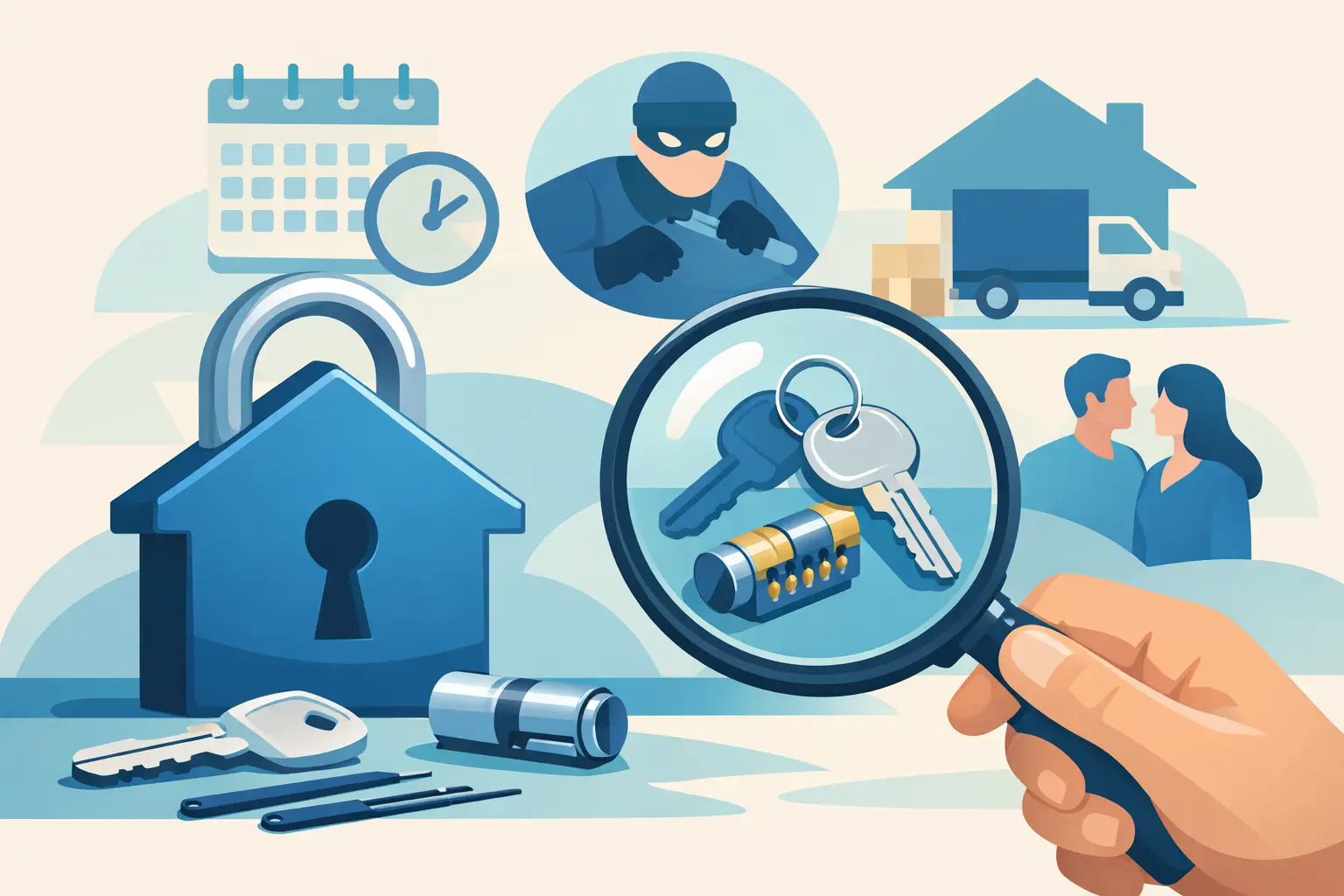
You get home after a long day, set your keys down, and realize something uncomfortable – you do not actually know who else might still have a copy. That is usually when people start asking, when should you rekey your locks? It is a smart question, because rekeying is one of the simplest ways to regain control over who can enter your home or business without replacing every piece of hardware.
Rekeying changes the internal pins of a lock so old keys stop working and a new key becomes the only one that fits. In many cases, the lock itself stays in place. That makes rekeying faster and more affordable than full lock replacement, while still improving security in a very practical way.
When should you rekey your locks at home?
For most homeowners and renters, the clearest time to rekey is right after moving in. Even if the previous owner, tenant, or property manager hands over every key they know about, there is no reliable way to confirm how many copies were made over the years. Friends, contractors, babysitters, dog walkers, cleaners, and former roommates may still have access. Rekeying gives you a clean start.
Another common reason is a lost or stolen key. If your key disappeared with no clear explanation, it is best to assume it could end up in the wrong hands. The risk is higher if your key was attached to anything with your address, vehicle information, or identification. In that situation, waiting can create an avoidable security problem.
A breakup, divorce, roommate conflict, or family change can also make rekeying necessary. These situations are personal, but the security decision is straightforward. If someone who once had approved access should no longer be able to enter, rekeying is often the fastest and most cost-effective fix.
Homeowners should also think about rekeying after renovation work or repeated service visits. Most contractors are honest professionals, but keys do get copied, misplaced, or shared among crews. If multiple people had access during a long project, rekeying can restore peace of mind once the work is done.
When should you rekey your locks for a business?
For businesses, rekeying tends to come up after employee turnover. If an employee leaves on good terms and returns all issued keys, the risk may be low. But if there is any uncertainty, especially with managers, maintenance staff, or anyone who had broad access, rekeying is worth serious consideration.
It also makes sense after changes in vendors or service providers. Cleaning companies, delivery personnel, security contractors, and maintenance teams often need after-hours entry. Over time, that can create a messy key trail. Rekeying helps reset access and tighten control.
If your business has changed locations inside a shared building, taken over a leased suite, or experienced a management transition, rekeying should be part of the handoff process. Commercial security works best when you know exactly who has a working key and which doors they can open.
In some cases, rekeying is not enough by itself. A business with frequent staff changes, sensitive inventory, or high traffic may benefit more from restricted key systems, master key planning, or access control. The right choice depends on how often access changes and how much control you need.
Rekeying after a break-in or attempted break-in
If someone forced entry, damaged a lock, or even tried to tamper with it, do not assume rekeying is always the answer. Sometimes the lock cylinder is still in good shape and can be rekeyed. Other times, the hardware has been compromised and should be replaced entirely.
That is why a professional assessment matters. A damaged lock may still turn, but internal wear or structural weakness can make it unreliable. If the goal is real security, not just a quick patch, the condition of the lock has to come first.
There is also the issue of visibility. After a break-in, many property owners want stronger hardware, deadbolt upgrades, or better key control instead of simply changing the key. That is often the right move, especially if the existing locks were already outdated.
Signs your locks should be rekeyed soon
Sometimes there is no major event. You just start noticing that your key situation is getting sloppy. Maybe too many people have copies. Maybe you cannot remember who has what. Maybe one exterior door uses a different key from the others and daily access has become inconvenient.
Those are valid reasons to rekey. Security is not only about reacting to emergencies. It is also about reducing uncertainty before it turns into a problem.
A few situations deserve quicker action:
- You moved into a new home or rental
- Your keys were lost, stolen, or unreturned
- You had a roommate, tenant, employee, or contractor change
- You experienced a break-in, attempted break-in, or suspicious activity
- You want one key to work on multiple compatible locks
That last point is easy to overlook. Rekeying is not always about danger. It can also simplify access by matching several locks to one key, assuming the hardware is compatible. For busy households and small businesses, that convenience matters.
Rekeying vs. replacing locks
A lot of customers ask whether they should rekey or replace. The answer depends on the condition of the lock, the level of security you want, and your budget.
Rekeying is usually the better option when the lock is in good condition and you simply need old keys disabled. It is efficient, cost-conscious, and effective for many homes, apartments, offices, and storefronts.
Replacing makes more sense when the lock is worn out, damaged, low quality, or no longer fits your security needs. If you want to upgrade to high-security locks, smart locks, keypad entry, or heavy-duty commercial hardware, replacement is often the smarter long-term investment.
There is also a middle ground. Some properties benefit from rekeying a few doors and replacing others. For example, a homeowner may rekey standard entry locks but replace a weak back door deadbolt with something stronger. A business might rekey office doors while upgrading the main entry to more secure hardware.
How often should locks be rekeyed?
There is no fixed schedule that fits every property. Locks do not need to be rekeyed every year just because time passed. What matters is a change in access, a change in occupancy, or a change in risk.
For rental properties, rekeying between tenants is a strong best practice. For homeowners, it often happens after a move, lost key, or household transition. For businesses, it may happen after staffing changes, vendor turnover, or a security review.
If you are asking the question because something feels off, that usually means it is time to look closer. Many people wait until there is a clear threat, but uncertainty itself is a security issue. If you do not know who can still get in, rekeying is often the simplest way to fix that.
Can every lock be rekeyed?
Not every lock can be rekeyed, and not every lock should be. Most standard residential and commercial cylinder locks can be, but some cheaper hardware, heavily worn locks, specialty systems, and certain electronic locks may need replacement instead.
Compatibility also matters if you want one key to operate multiple doors. The locks generally need to accept the same keyway or be set up in a way that allows matching. This is one reason a professional locksmith should inspect the hardware before promising a specific outcome.
A trained locksmith can also spot issues customers often miss, like loose strike plates, poor door alignment, weak deadbolts, or cylinders that are technically rekeyable but close to failure. Rekeying works best when it is part of a bigger look at how secure the opening really is.
The value of acting early
People often delay rekeying because nothing bad has happened yet. That is understandable. But security decisions are usually less expensive and less stressful when handled before there is an emergency.
A fast rekey after a move, lost key, or employee exit can prevent bigger problems later. It can also give you a clear, updated starting point for key control. You know who has access, how many copies exist, and whether your current setup still makes sense.
For property owners in Raleigh and nearby communities, a local mobile locksmith can usually handle rekeying quickly on-site, whether it is one front door, an entire office, or a rental turnover. Advance Locksmith Inc regularly helps customers make those changes without replacing more hardware than necessary.
If you are unsure whether to rekey now or wait, ask yourself one practical question: do you fully trust every person who might still have a working key? If the answer is no, or even maybe, that is usually your answer.