
Best Locks for Front Door Security

A front door can look solid and still be the weak point of the house. We see it all the time – homeowners invest in cameras, lights, and alarms, but the actual lock on the main entry is outdated, poorly installed, or simply not built to resist force. If you are comparing the best locks for front door security, the right answer depends on your door, frame, daily routine, and how much control you want over keys and access.
For most homes, there is no single “perfect” lock. A good setup is usually a strong deadbolt, proper installation, a reinforced strike area, and in some cases a smart locking option that adds convenience without giving up security. The lock matters, but the full door assembly matters just as much.
What makes the best locks for front door security?
The strongest front door locks do two jobs well. First, they resist forced entry. Second, they work reliably every day without sticking, loosening, or creating a hassle that leads people to stop using them correctly.
That is why lock selection should go beyond brand names and packaging claims. You want to look at the lock type, the grade, the bolt length, the cylinder design, and whether the hardware is matched to the condition of the door and frame. A quality lock installed on a weak frame can still fail quickly. On the other hand, a well-installed lock on a reinforced door can make a major difference.
Lock grades matter more than many homeowners realize
Residential locks are often sold with appearance in mind, but security performance is where the real value is. Higher-grade hardware is generally tested for durability, strength, and cycle life. For a front door that gets daily use, that matters.
A lower-cost lock may seem fine at first, but internal components can wear faster, keys may stop turning smoothly, and the bolt may not align well over time. If your front door is your primary entry, investing in better hardware usually pays off in both security and day-to-day reliability.
Deadbolts are still the standard choice
For traditional front door security, a single-cylinder deadbolt remains one of the best options. It is simple, proven, and effective when installed correctly. This type of lock uses a key on the outside and a thumb turn on the inside, making it practical for most homes.
A good deadbolt should throw a solid one-inch bolt and anchor securely into a reinforced strike plate. It should also be paired with long screws that reach into the wall stud, not just the trim. That part is often overlooked, but it can significantly improve resistance to kick-ins.
Single-cylinder vs. double-cylinder deadbolts
A single-cylinder deadbolt is usually the best fit for most front doors because it allows quick exit from inside without a key. That is an important safety factor in an emergency.
A double-cylinder deadbolt uses a key on both sides. Some homeowners consider it for doors with nearby glass, since it can prevent someone from breaking the glass and turning the thumb piece from inside. The trade-off is that it can slow emergency exit and may not be appropriate under local fire safety rules. This is one of those areas where the right answer depends on the layout of the entry and the code requirements for the property.
High-security deadbolts offer stronger protection
If you want more than basic hardware-store security, a high-security deadbolt is worth considering. These locks are designed with tougher cylinders, better drill resistance, and keyways that are harder to pick or duplicate casually.
For homeowners concerned about break-ins, lost keys, or previous tenant access, high-security locks can offer a real upgrade. They are especially useful for houses with side glass near the front entry, homes used as rentals, or properties where tighter key control matters.
The main trade-off is cost. High-security locks are more expensive than standard deadbolts, and proper installation matters even more. But for many homeowners, the extra protection and peace of mind justify the investment.
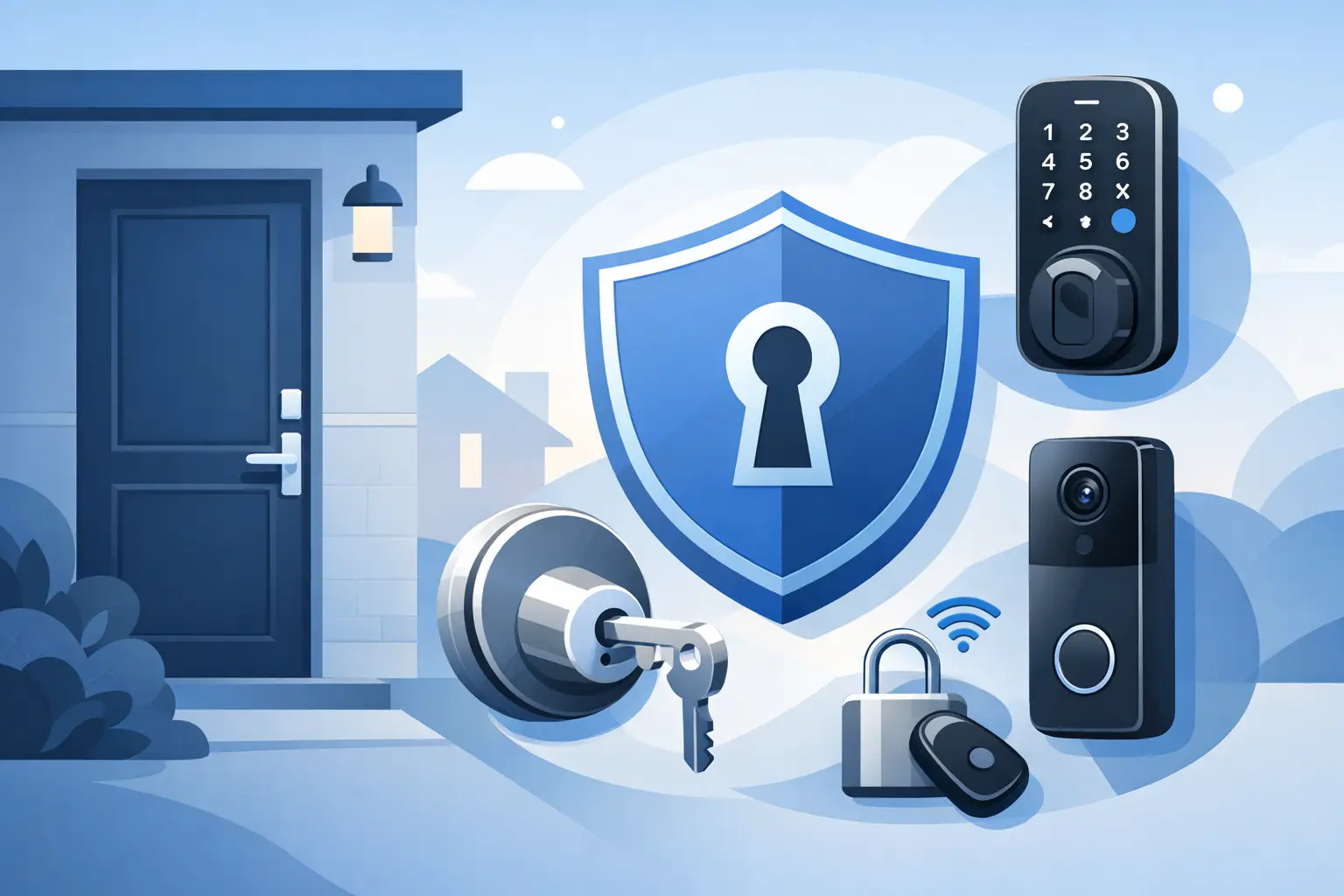
Smart locks can be a good fit, but only in the right setup
Smart locks have become popular because they solve everyday problems. No more hiding spare keys. No more wondering whether the door was locked. Temporary codes can also be useful for family members, dog walkers, guests, or service providers.
That convenience is real, but smart locks are not automatically the best choice for every front door. Build quality varies. Some models are designed more for convenience than physical strength, and some depend heavily on battery health, Wi-Fi stability, or phone app performance.
When smart locks make sense
A smart lock can be a strong option if you want controlled access, audit trails, or remote locking capability. Many homeowners like them for busy households where multiple people come and go throughout the day.
The best smart setups are usually built around a quality deadbolt rather than replacing security with electronics alone. In other words, you want the lock to be physically strong first, then smart second. Features are helpful, but they should not come at the expense of solid mechanical protection.
When a traditional lock may be better
If you prefer simple, low-maintenance hardware, a high-quality standard deadbolt may be the better long-term choice. This is often true for older doors, properties with alignment issues, or homeowners who do not want to rely on batteries and apps.
In many cases, a mechanical lock with proper reinforcement will provide better value than a lower-end smart lock packed with features but light on real security.
Handle sets and knob locks should not do the heavy lifting
Many front doors have decorative handle sets or keyed entry knobs, and they can be useful as part of the door hardware. But they should not be your main security layer.
Knob locks are generally weaker than deadbolts and easier to force. A front door secured only by a locking knob is not ideal. The better approach is to treat the handle set or knob as a convenience latch and rely on a deadbolt for actual protection.
This is a common issue in homes where the original builder hardware was chosen for appearance first. Upgrading the deadbolt while keeping the exterior style consistent is often a smart middle ground.
The door frame and strike plate are part of the lock system
One of the biggest mistakes homeowners make is focusing only on the lock body. Even the best locks for front door security will underperform if the strike plate is weak, the frame is split, or the screws are too short.
A reinforced strike plate, longer mounting screws, and a properly aligned frame can make a major difference in how the door handles force. If the bolt does not fully extend or the door shifts when closed, the lock may not be protecting the way it should.
This is why professional installation often matters more than people expect. Small alignment issues can reduce both security and the life of the hardware.
Rekeying vs. replacing the lock
Sometimes the best move is not buying a brand-new lock. If you recently moved in, lost a key, or are unsure who may still have copies, rekeying can restore control without replacing all the hardware.
That said, rekeying only makes sense if the existing lock is worth keeping. If the hardware is worn, low-grade, or outdated, replacement is usually the better investment. A locksmith can tell you quickly whether the lock itself is still a good candidate.
How to choose the right front door lock for your home
Start with how the door is used. A busy family home may benefit from a smart deadbolt with user codes. A quieter household may be better served by a high-security mechanical deadbolt. If there is glass near the lock, or if the door and frame are older, the recommendation may change.
You should also think about who needs access, how often keys get shared, and whether convenience is becoming a security issue. For example, if spare keys are being left outside regularly, a secure keypad system may actually improve safety.
For homeowners in Raleigh and nearby communities, humidity, wear, and settling can also affect lock performance over time. A lock that looks fine on paper still needs to work smoothly on the specific door it is installed on.
Professional installation makes a real difference
A lock is only as good as its installation. Misalignment, loose screws, shallow bolt throw, or poor reinforcement can leave even expensive hardware vulnerable.
That is why many homeowners choose to have front door locks installed or upgraded by a licensed locksmith. A professional can evaluate the condition of the door, recommend the right hardware for the layout, and make sure the full system works as intended. At Advance Locksmith Inc, that usually means looking beyond the lock itself and addressing the parts around it that affect security just as much.
If your front door lock is sticking, loose, outdated, or simply not giving you confidence, it is worth addressing before it becomes an emergency. The right lock should not just close the door. It should help you feel secure every time you come home.