
High Security Locks for Business: What Fits

A break-in at a business rarely starts with a dramatic smash-and-grab. More often, it starts with an easy weakness – a standard lock that can be picked, bumped, drilled, or opened with an unauthorized copy of a key. That is why high security locks for business are not just an upgrade for large facilities. They are a practical security step for offices, retail stores, warehouses, clinics, and multi-tenant properties that need better control over who gets in and how.
Business owners in Raleigh and surrounding areas often ask the same question: do high-security locks really make a difference, or are they just a more expensive version of a regular lock? The short answer is yes, they make a real difference, but only when the lock matches the property, traffic level, and day-to-day risk. The right setup can reduce unauthorized key duplication, resist forced entry, and give you more confidence in your access points.
What makes high security locks for business different?
A standard commercial lock may do the job for basic use, but it is usually designed around convenience and cost. High-security hardware is built around resistance and control. That means stronger internal components, more advanced keyways, and better protection against common entry methods.
One of the biggest differences is key control. With many standard locks, keys can be copied at a hardware store with little effort. A high-security system is designed to limit that risk. Restricted keyways and patented key systems help business owners control duplication, which matters when multiple employees, vendors, or former staff may have had access over time.
Physical strength is the other major factor. High-security cylinders and lock bodies are often designed to resist picking, drilling, bumping, and other forms of tampering. That does not mean no lock can ever be defeated. It means a criminal faces more time, more noise, and more difficulty at the door. In many cases, that added resistance is enough to make the attempt fail or send them looking elsewhere.
Where businesses benefit most from high-security locks
Not every business needs the same level of protection at every door. A front entrance, server room, medicine storage area, records office, and employee-only stockroom all carry different levels of risk. The best plan usually starts by identifying which openings matter most.
Retail stores often benefit from stronger exterior door hardware and better key control because employee turnover can be frequent. Offices may focus more on controlling access to private suites, file rooms, or after-hours entry points. Warehouses and industrial spaces usually need durable hardware that stands up to heavy daily use while protecting loading areas, side doors, and gates.
If your business has ever dealt with missing keys, employee separation, tenant changes, attempted break-ins, or doors that simply feel too easy to compromise, that is usually a sign your current hardware deserves a closer look.
Common types of high-security lock systems
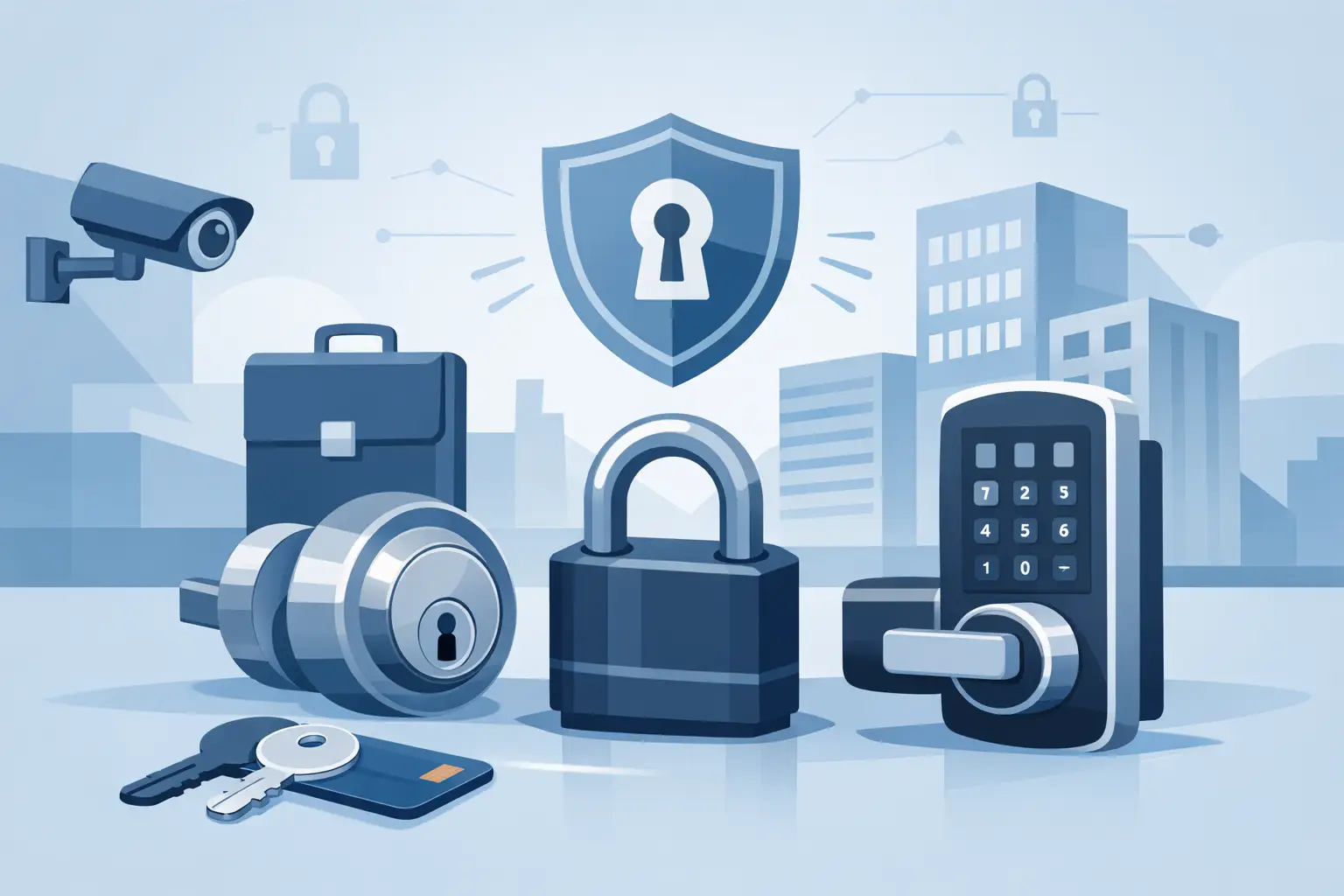
There is no single best lock for every business. The right choice depends on your door type, your traffic, and whether you want traditional keyed access, audit trails, or a broader access control setup.
Restricted key cylinders
These are a strong option for many small and mid-sized businesses. They look familiar and are easy for staff to use, but they offer stronger resistance to unauthorized duplication and common bypass methods. For a business that wants better protection without changing how employees enter the building, this is often the most practical starting point.
Heavy-duty commercial deadbolts and mortise locks
For exterior doors, deadbolts and mortise lock systems can add a stronger layer of physical security than basic cylindrical locks. This matters most at storefronts, office entrances, and rear service doors where forced entry is a concern. The exact choice depends on the door material, frame condition, and whether the hardware is rated for commercial use.
Keypad and electronic lock options
Some businesses want to move beyond physical keys entirely for certain doors. Electronic locks, keypads, and credential-based systems can work well when staff changes are common or when business owners want easier control over user access. Instead of collecting old keys, you can change codes, remove users, or create time-based permissions.
That said, electronic options are not automatically better in every situation. They require proper installation, power planning, and ongoing management. For some businesses, a hybrid setup works best – high-security keyed hardware on some doors and electronic access on others.
Choosing the right system for your property
A lock should match the real-world use of the building, not just the product brochure. A busy retail entrance has different demands than a private office suite. A medical office may need stronger protection for records and supply rooms, while a warehouse may need tough hardware that handles constant traffic and rough use.
When evaluating high security locks for business, start with four practical questions. How many people need access? How often does staff change? Which doors create the highest risk? And what would happen if a key were lost or copied?
If access is shared by many people, key control becomes a priority. If staff turnover is frequent, rekeying or moving to an electronic solution may save money and stress over time. If your building has weak door frames, outdated strike plates, or poor alignment, even the best cylinder may not solve the bigger problem on its own.
That is why a professional assessment matters. Security is rarely about one product. It is about how the lock, door, frame, strike, and user habits all work together.
Installation matters more than many owners realize
A strong lock can still underperform if it is poorly installed. Misalignment, loose hardware, short screws, worn frames, and incorrect door prep can all weaken the final result. Business owners sometimes replace the visible lock but leave the vulnerable parts around it untouched.
Proper installation should account for the condition of the entire opening. That includes the frame, hinges, latch engagement, strike reinforcement, and code compliance. In commercial settings, life safety requirements also matter. Some doors need hardware that allows safe egress while still maintaining security.
This is where working with an experienced commercial locksmith helps. A qualified technician can recommend hardware that fits the door and usage level, then install it correctly so the system performs as intended.
Cost, value, and the trade-offs to consider
High-security locks cost more than standard locks. There is no reason to pretend otherwise. The better question is what that extra cost buys you.
In many cases, it buys fewer preventable problems. Better resistance to tampering. Better key control. Less risk after employee turnover. More confidence that your front, rear, and restricted-access doors are not the easiest part of your security plan to defeat.
Still, not every business needs top-tier hardware on every opening. A smart security plan usually prioritizes the doors that matter most. That keeps the budget realistic while improving the places where risk is highest. It also leaves room to build in phases if needed.
For many Raleigh-area businesses, the best value comes from combining high-security mechanical locks with practical policies. That means tracking key holders, rekeying when staff changes, fixing damaged doors promptly, and reviewing access points before a problem happens.
When to upgrade your business locks
Some upgrades happen after an incident, but waiting for a break-in or internal access problem is rarely the best approach. If your business has aging hardware, unexplained key copies, recurring lock issues, or doors that no longer feel secure, it is time to take a closer look.
An upgrade also makes sense after moving into a new commercial space, taking over a tenant unit, changing management, or expanding employee access. In those moments, you have a chance to reset control before small gaps turn into bigger risks.
For business owners who are not sure where to start, a local commercial locksmith can help assess the property and recommend what makes sense for your budget and your operations. Advance Locksmith Inc works with businesses in Raleigh and nearby communities to improve door security with dependable hardware, proper installation, and practical guidance that fits the way a business actually runs.
A good lock does more than secure a door. It gives you better control over your property, your people, and the problems you do not want to deal with at 6 a.m. on a Monday.