
Office Lockout Service After Hours

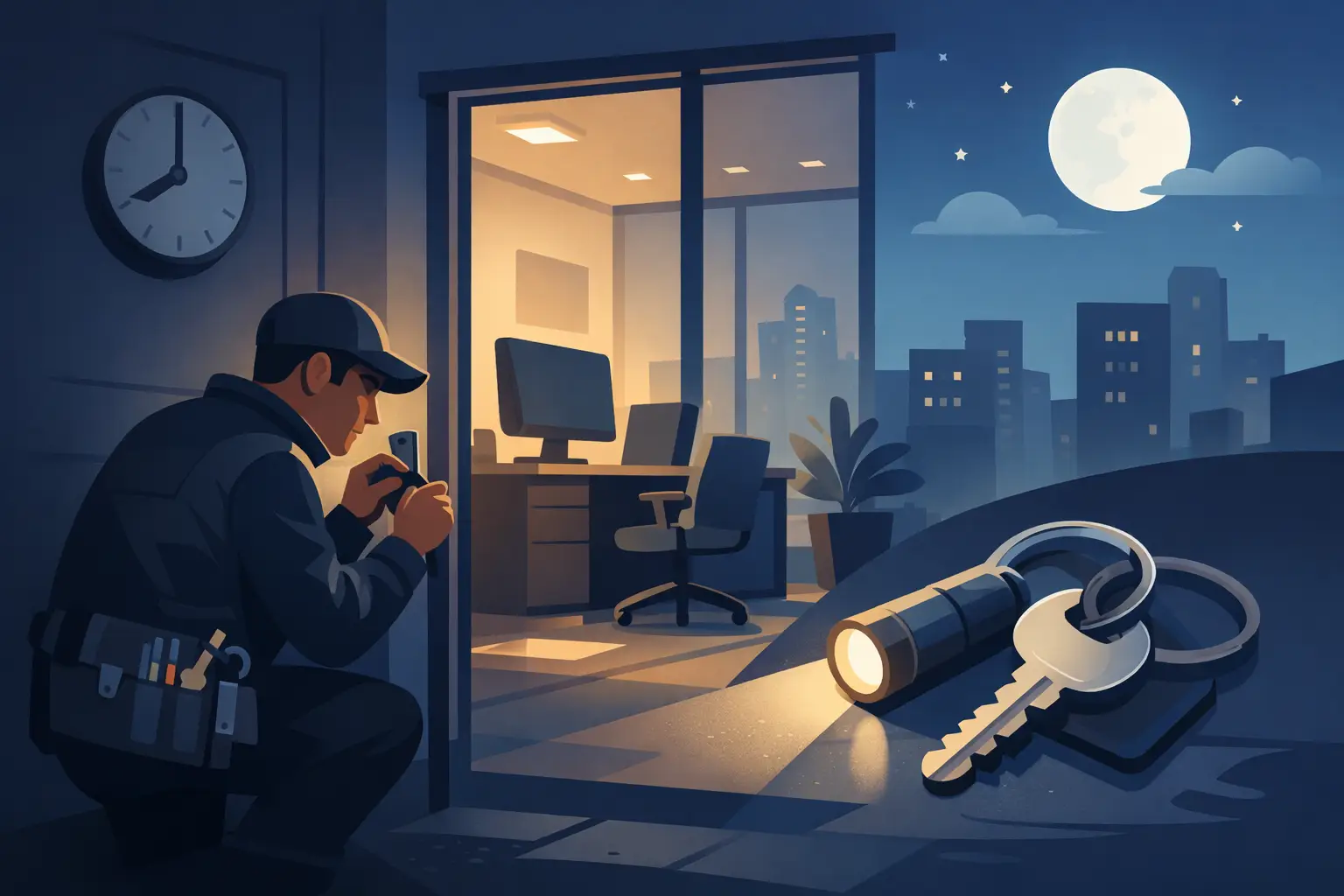
It is 9:40 p.m., the cleaning crew is waiting, tomorrow’s files are inside, and the person with the only working key is already home. That is when office lockout service after hours stops being a minor inconvenience and turns into a business problem. Lost time, exposed deliveries, delayed staff access, and security concerns can all stack up fast when a commercial door will not open.
For business owners and property managers, the goal is not just getting back inside. The real priority is restoring access without damaging the door, the frame, the lock, or the security of the building. After-hours lockouts often happen under pressure, and that is exactly why professional response matters.
When after-hours office lockouts become urgent
Some lockouts are obvious emergencies. A manager steps out to take a call and the door closes behind them. An employee leaves keys on a desk after everyone else has gone home. A keypad battery dies after closing time, or a worn commercial lock suddenly stops turning at the end of the day.
Other situations are less dramatic but just as disruptive. A tenant cannot access a suite before an early meeting. A retail manager is locked out before opening. A maintenance team cannot get into a storage room with equipment needed overnight. In each case, the delay affects operations, staff, and sometimes customer service.
That is why after-hours commercial locksmith work is different from a routine daytime appointment. The technician has to solve the immediate access issue while also thinking about business continuity and site security.
What a professional office lockout service after hours should handle
A proper office lockout service after hours is about more than opening one door. Commercial properties often have tighter security, specialized hardware, and more variables than a house or apartment. The lock may be part of a master key system, a panic bar setup, a high-security cylinder, or an electronic access system.
An experienced locksmith starts by confirming authorization before any work begins. That protects the business, the property owner, and the people inside. From there, the technician evaluates the door, lock type, and cause of the lockout. In many cases, entry can be restored without drilling or replacing the hardware.
If the issue is a failed lock, broken key, damaged cylinder, misaligned door, or malfunctioning keypad, the right response may involve repair instead of simple entry. That distinction matters. If someone forces the wrong fix at night, the business could end up with a door that opens but no longer secures properly.
Why commercial lockouts are not a DIY job
Business owners are practical people. When you are locked out, it is natural to wonder whether there is a quick workaround. Sometimes there is, but forcing a commercial lock or trying improvised tools usually creates bigger problems.
Office doors are often built with stronger hardware and tighter tolerances than residential doors. A bent latch, damaged strike, broken lever, or scarred frame can cost far more than the original service call. If the lock is tied to restricted keys or a managed access system, amateur handling can also complicate future rekeying or replacement.
There is also the liability issue. If multiple tenants share a building, or if the space contains records, inventory, or controlled access areas, unauthorized or poorly documented entry can create serious concerns. A licensed locksmith follows a process, verifies authority, and works in a way that preserves security instead of weakening it.
What to expect during an after-hours response
When you call for emergency commercial locksmith help at night, speed matters, but so does accuracy. The best service starts with a few direct questions: your location, the type of business, whether someone is locked inside or outside, what kind of lock is involved, and whether the issue is lost keys, broken hardware, or an electronic failure.
That information helps the technician arrive prepared. A mobile locksmith should carry tools and replacement parts suited for common commercial lockout situations. The aim is to resolve the issue on site in one visit whenever possible.
Once on location, the locksmith will typically verify identification and authorization, inspect the entry point, and choose the least destructive method first. If the lock can be picked, decoded, or bypassed safely, that is usually the best outcome. If the hardware has failed, the technician may recommend repair, rekeying, or replacement before leaving.
For many businesses, this is also the moment to ask one practical question: was this a one-time mistake, or is it a sign of a larger security problem? A worn lock, poor key control, or outdated access setup often shows itself during a late-night lockout.
Common causes of office lockouts after business hours
Most after-hours office lockouts come down to one of a few issues. Lost or forgotten keys are the obvious one, especially in offices where only one or two people carry full access. Worn keys and aging cylinders are another frequent cause, particularly in older buildings with heavy daily use.
Electronic systems bring their own risks. Dead keypad batteries, software glitches, failed readers, and power-related issues can all block entry when support staff are no longer on site. Door closers and alignment problems can also create a lockout that looks like a key issue when the real problem is mechanical.
Human error is still a major factor. Staff turnover, poor key tracking, and inconsistent lock procedures often create late-night access problems. If that sounds familiar, the lockout is not just an inconvenience. It is useful information.
How to reduce the chances of another office lockout service after hours call
A late-night lockout can be a one-off event, but many businesses discover preventable gaps after the fact. The simplest fix is better key control. Know who has keys, which doors they open, and what happens when an employee leaves. If keys have changed hands too many times, rekeying is often the smarter move than hoping old copies are gone.
It also helps to inspect commercial hardware before it fails. Sticky locks, loose levers, keys that require extra force, and doors that do not latch cleanly are all warning signs. Addressing those issues during business hours is almost always easier and less disruptive than dealing with them at night.
For some offices, upgrading the access setup makes sense. Keyless entry, restricted key systems, and managed access control can improve both convenience and security. The right option depends on the size of the business, the number of users, and how sensitive the space is. A small office may only need tighter key management, while a larger property may benefit from a more controlled entry system.
Local response matters for Raleigh-area businesses
When an office lockout happens after hours, waiting is the hardest part. A local locksmith who knows Raleigh and surrounding communities can usually respond more efficiently than a provider coming from farther out. That matters when staff are standing outside, vendors are on the way, or the building needs to be secured before the night is over.
It also helps to work with a locksmith who understands the needs of local businesses, from small offices and retail storefronts to medical suites, warehouses, and mixed-use commercial properties. Different buildings bring different hardware, and after-hours problems rarely follow a script.
Advance Locksmith Inc serves businesses that need fast, professional help without guesswork. The focus is simple: restore access, protect the property, and make sure the door is secure when the job is done.
Choosing the right help when the office door will not open
Not every lockout call is equal. Some require quick non-destructive entry. Others reveal a failing lock that should not be trusted for another day. The right locksmith will tell you the difference clearly, explain your options, and avoid unnecessary replacement if repair or rekeying will do the job.
That kind of honest service matters after hours, when stress is high and decisions are rushed. You want a technician who treats the situation like a business problem, not just a locked door.
If your office is closed, your staff is waiting, or your commercial lock has failed at the worst possible time, getting experienced help quickly is the safest move. One late-night call can solve the immediate problem and give you a better plan for keeping it from happening again.