

Best Commercial Door Lock Brands for Raleigh

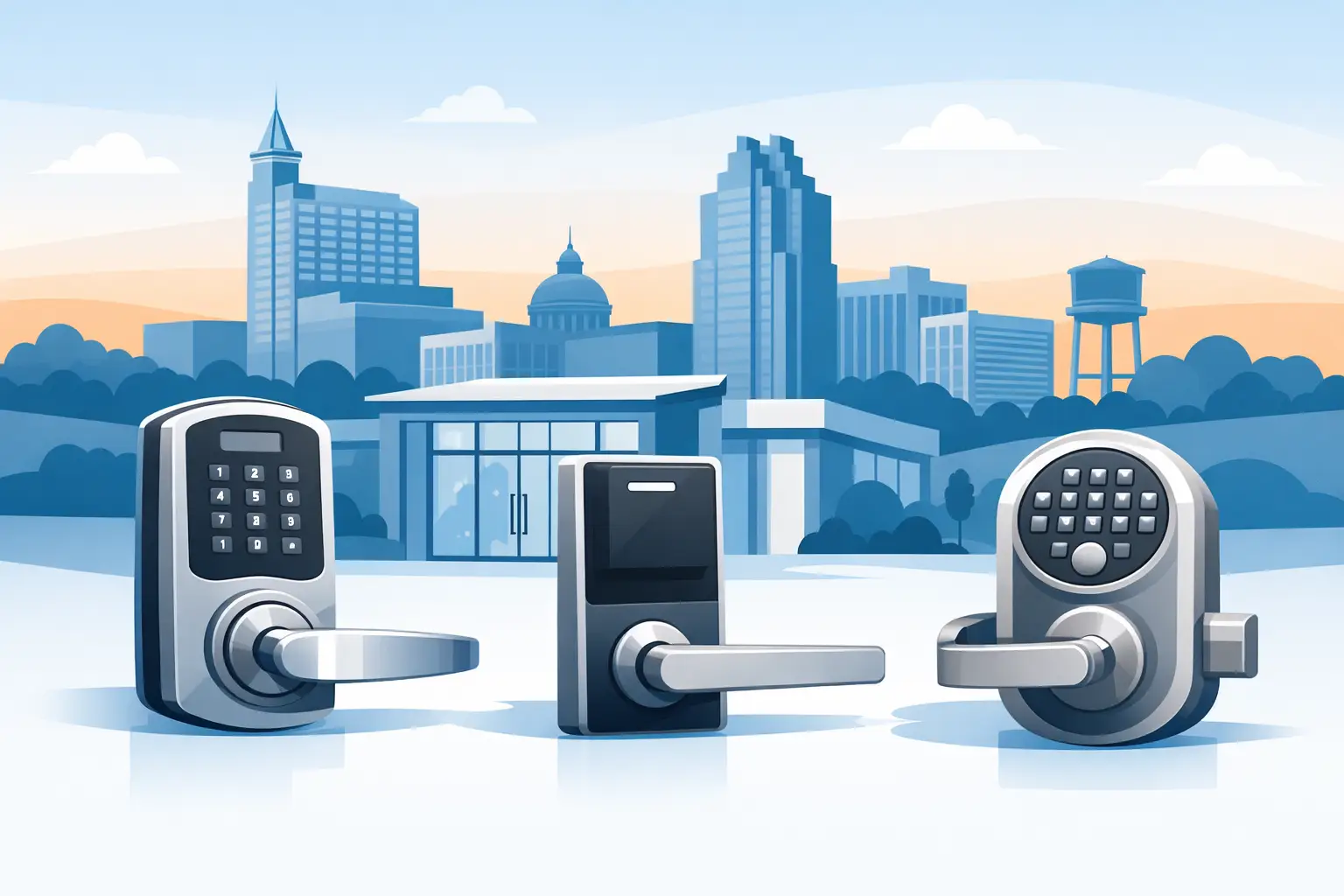
A broken lever, a lost master key, or an employee who never returned a key can create a security problem long before a business owner has time to plan an upgrade. Choosing from the best commercial door lock brands is not just about buying a tougher lock. It is about matching the right hardware, key system, and access method to the doors people use every day.
For a Raleigh office, retail store, warehouse, medical practice, or rental property, the right choice depends on traffic, door construction, fire code requirements, and how much control you need over keys. A dependable commercial lock should stand up to daily use while making it easier to protect employees, customers, inventory, and sensitive areas.
What Makes a Commercial Lock Brand Worth Choosing?
A commercial lock is expected to do more than a typical residential lock. It may be opened hundreds of times each day, used by different employees, tied to an exit device, or installed on a fire-rated door. Brand reputation matters because consistent manufacturing, replacement-part availability, and professional-grade keying all affect how well the system performs over time.
Look first at the lock’s ANSI/BHMA grade. Grade 1 is generally the strongest category for high-traffic commercial applications. Grade 2 hardware can be a sensible choice for lower-traffic offices, interior doors, and light commercial use. The grade alone is not the whole answer, though. A Grade 1 lever on the wrong door or in the wrong function will not solve the problem.
The best choice also depends on whether you need a cylindrical lever lock, mortise lock, deadbolt, panic hardware, keypad, card reader, or a complete access control system. A qualified locksmith can evaluate the door, frame, hinges, latch position, existing prep, and applicable code requirements before recommending hardware.
Best Commercial Door Lock Brands to Consider
Schlage
Schlage is one of the most recognized names in commercial door hardware, and for good reason. Its commercial levers, deadbolts, electronic locks, and key systems are widely used in offices, schools, retail spaces, and multifamily properties. Schlage offers options ranging from standard cylindrical locks to electronic credential systems that can support more controlled access.
For many small and mid-sized businesses, Schlage is a practical balance of durability, parts availability, and familiar operation. It is especially useful when a property needs dependable mechanical hardware now but may want to add electronic access later. The trade-off is that product lines vary significantly, so a basic commercial-grade model should not be confused with the heavier-duty hardware needed for a busy public entrance.
Yale
Yale offers commercial mechanical and electronic locking solutions with a strong focus on keyless entry and access management. Its keypad and credential-based options can work well for businesses that want to reduce the number of physical keys in circulation. This can be helpful for professional offices, managed properties, employee-only rooms, and businesses with changing staff.
Electronic Yale hardware can make access changes easier when compared with rekeying every time a code or credential needs to be removed. However, electronic access still requires planning. Battery maintenance, user permissions, door compatibility, and backup entry procedures all need to be considered. A keypad is convenient, but it should be installed and managed with the same care as a conventional lock system.
Sargent
Sargent is a respected commercial hardware brand often found in institutional, educational, healthcare, and high-use settings. Its product range includes cylindrical and mortise locks, exit devices, door closers, and electronic access solutions. Sargent hardware is known for applications where reliability, code compliance, and repeated daily use are major concerns.
A Sargent system may be more hardware than a small, low-traffic office needs, but it is often a strong fit for buildings with multiple openings, large staff counts, or doors that see constant use. Mortise lock options are particularly valuable when the door and security requirements call for a more substantial lock body than a standard cylindrical lever provides.
Corbin Russwin
Corbin Russwin is another established choice for heavy-duty commercial environments. The brand is frequently specified for schools, government buildings, hospitals, and facilities that need durable hardware with a long service life. Its commercial locks, exit devices, and key control options are built for demanding applications.
For business owners, the benefit is confidence in a system designed for serious use. The consideration is cost and installation complexity. High-quality commercial hardware should be selected by application, not simply because it is available. A professional assessment helps ensure the door, frame, strike, and closer can support the hardware properly.
BEST
BEST is especially well known for interchangeable core systems and higher-security key control. This makes it a valuable option for properties where key management is a continuing concern, such as office complexes, campuses, medical facilities, apartment communities, and businesses with several restricted areas.
With an interchangeable core, a locksmith can often change the core without replacing the entire lock body. That can save time after a key is lost, an employee leaves, or a tenant moves out. BEST is not the only answer for key control, but it is a proven choice when an owner wants a structured master key system and the ability to respond quickly to changing access needs.
Von Duprin
Von Duprin is best known for exit devices, commonly called panic bars. While an exit device is not the same as a standalone door lock, it is essential hardware on many commercial doors. It allows people to exit quickly while securing the exterior side of the opening.
Businesses often need Von Duprin-style panic hardware on rear exits, public assembly spaces, schools, certain retail locations, and other doors governed by life-safety requirements. Selecting the right exit device involves more than security. It must allow safe egress and work with the door’s rating, handing, trim, and locking function. Never replace or modify panic hardware without verifying code requirements.
Mechanical Locks, Electronic Locks, or Access Control?
A traditional commercial lock remains a smart choice for many doors. Mechanical hardware is straightforward, dependable, and does not rely on batteries, software, or credentials. Paired with a well-designed restricted keyway or master key system, it can provide strong day-to-day security at a manageable cost.
Electronic locks are useful when convenience and accountability matter more. A keypad, fob, card, or mobile credential can reduce the need to issue physical keys. Some systems also provide audit information showing when a door was accessed. This may be useful for inventory rooms, private offices, employee entrances, and shared commercial buildings.
Full access control is usually the better path for properties that need centralized management across several doors. It allows authorized users to be added or removed without changing lock cylinders, and access can be scheduled by time or location. The added control comes with a higher initial investment and a need for professional installation, reliable power, and ongoing system management.
Do Not Overlook the Door Itself
Even the best lock cannot compensate for a weak door frame, loose hinges, damaged strike plate, or poor installation. Commercial security is a system. The lock, latch, strike, door closer, frame, glass, and access rules must work together.
For example, a solid commercial lever may not improve security if the strike is attached with short screws or the frame is deteriorated. Likewise, installing a heavy-duty lock on a fire-rated door without using compatible hardware can create code and safety issues. A locksmith should inspect the complete opening before recommending a replacement.
Questions to Ask Before Buying Commercial Hardware
Before selecting a brand, consider how many people need access, which doors are public-facing, and what happens when an employee leaves. Think about whether keys are being copied without authorization, whether restricted areas need different access levels, and whether the business has an emergency plan for lost credentials or power interruptions.
It also helps to consider the total cost over several years. The least expensive lock may cost more in service calls, rekeying, failed latches, and replacement hardware. On the other hand, a complex electronic system may not make sense for a single low-traffic office door. The goal is a practical system that fits the building and can be serviced when needed.
For Raleigh-area business owners, Advance Locksmith Inc can assess existing doors, identify weak points, and install commercial hardware that fits your security needs and budget. Whether you need a heavy-duty lever, a master key system, panic hardware, or controlled employee access, professional installation helps protect the investment.
The right commercial lock brand is the one that supports safe daily operations without creating unnecessary complications. Start with the door, the people who use it, and the access risks you need to manage. From there, a properly selected and professionally installed system gives your business a stronger foundation for everyday security.