

How Long Does Lock Rekeying Take for a Home?

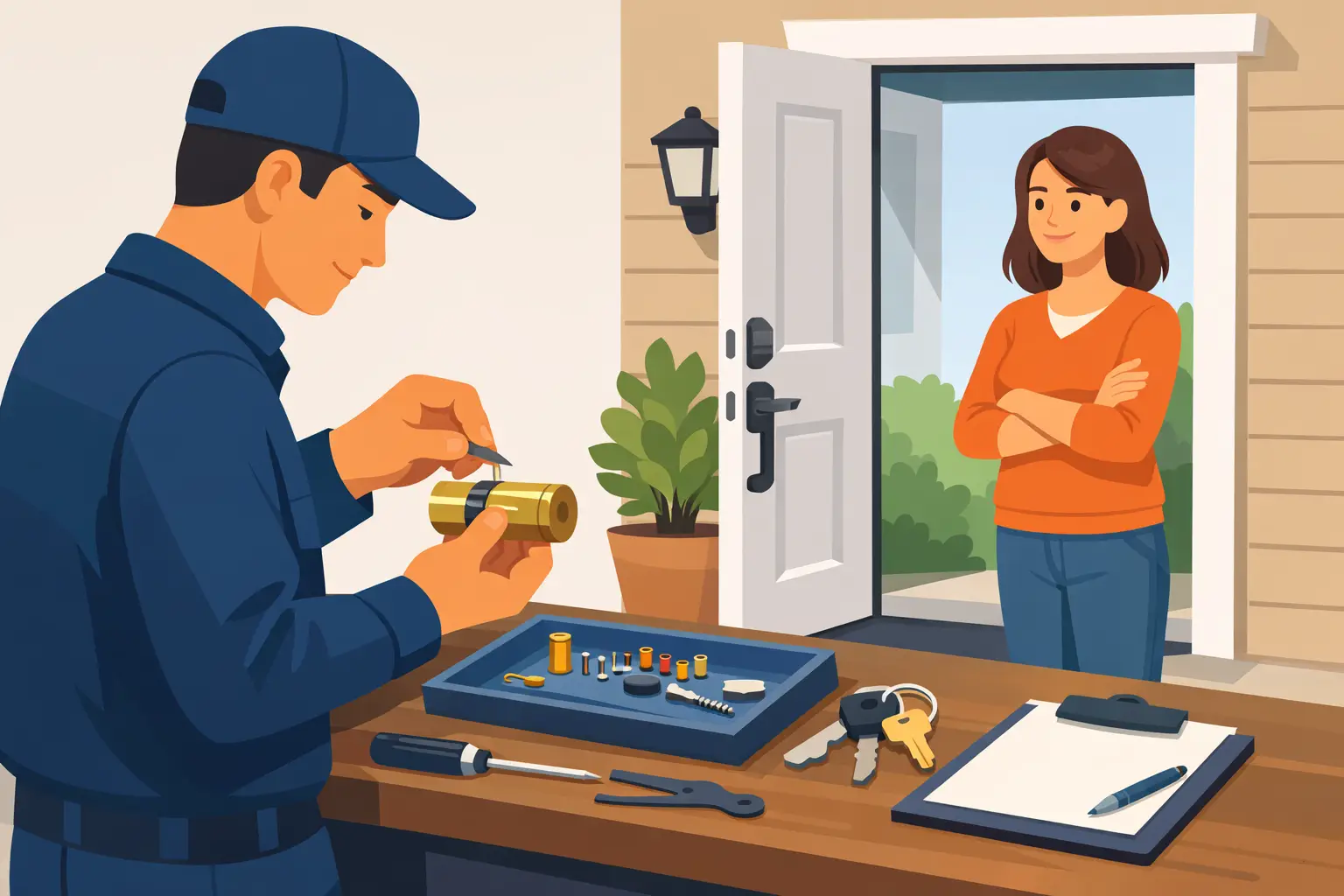
A lost house key, a tenant move-out, or an employee who never returned a key can turn a normal day into a security concern fast. So, how long does lock rekeying take? For many standard residential locks, a trained locksmith can rekey a single lock in about 10 to 20 minutes. A full home, business suite, or more complex lock system can take longer, but it is often still completed in one service visit.
Rekeying is usually faster and more affordable than replacing every lock. Instead of installing new hardware, a locksmith changes the internal pin configuration so the old key no longer works and a new key operates the lock. It is a practical way to regain control of who has access to your property.
How Long Does Lock Rekeying Take in Most Cases?
The timing depends on the number and condition of your locks. If you have one standard deadbolt or doorknob lock that is working properly, rekeying is commonly a quick job. A locksmith removes the lock cylinder, adjusts the pins to match a new key, tests the operation, and provides the new keys.
For a typical home with several exterior doors, allow roughly 30 minutes to an hour and a half. That range accounts for front and back doors, garage-entry doors, patio doors, and any locks that need to be matched to one key. If every lock is compatible and in good condition, the work may move quickly. If locks are worn, damaged, or use different keyways, the appointment can take longer.
Commercial rekeying often requires more time because there may be more doors, multiple keyholders, restricted key systems, or master-key requirements. A small office with a few doors may be finished within an hour or two. A larger business, retail space, apartment property, or facility with many access points should be assessed individually before a firm time estimate is given.
What Can Make Rekeying Take Longer?
A professional locksmith does not just change pins and leave. The work should include checking that the lock operates correctly, that the new key turns smoothly, and that the door latches and secures as it should. Several factors can affect the total service time.
Number of locks and doors
More locks naturally mean more work. A homeowner may only need the front-door deadbolt rekeyed after a misplaced key. Another property owner may want every exterior entry, storage room, mailbox, and garage-access door rekeyed to one new key. The second job will take longer, even when each lock is straightforward.
Lock type and brand
Standard pin-tumbler locks are generally quick to rekey. High-security locks, restricted keyways, smart lock components, mortise cylinders, and commercial-grade hardware can require specialized tools, key blanks, or additional setup. Some locks cannot be rekeyed at all, particularly if the internal mechanism is damaged or the hardware was not designed for it.
A locksmith will identify the lock type before beginning work and explain whether rekeying is the right solution. If replacement is necessary, you should know why before any hardware is changed.
Condition of the hardware
A lock that sticks, has a bent key lodged inside, is heavily corroded, or has worn internal parts may need repair before it can be reliably rekeyed. Rekeying a failing lock without addressing the problem may leave you with a new key but an unreliable door.
Sometimes replacement is the smarter choice. This is especially true if a lock is loose, has been forced during a break-in, does not latch properly, or no longer provides the level of security you need. Rekeying controls access. It does not correct damaged hardware or strengthen a weak door.
Matching locks to one key
Many homeowners prefer one key for all exterior doors. This is convenient and reduces the number of keys you carry, but it depends on whether the locks are compatible. Different brands and keyways may not be able to use the same key without changing cylinders or replacing certain hardware.
An experienced locksmith can explain your options. In some cases, rekeying selected locks and replacing one incompatible cylinder is more cost-effective than replacing every lock on the property.
Master-key systems and access planning
For businesses, rekeying can involve more than changing a few cylinders. A master-key system may need to allow one key to open all appropriate doors while limiting employee access to specific rooms. That planning takes care and accuracy. It is worth allowing extra time because a poorly configured system can create security gaps or access problems for staff.
Rekeying vs. Replacing Locks: Which Is Faster?
Rekeying is normally the faster option when your existing locks are secure, functional, and compatible with the new key setup. The locksmith works with the lock already installed, so there is no need to remove old hardware, drill new holes, adjust the strike plate, or fit a new lockset to the door.
Replacing a lock can take longer, particularly when the new hardware is a different size or style. Still, replacement may be the better investment if you want a deadbolt upgrade, keyless entry, high-security protection, or hardware that better matches your door and security needs.
The key question is not only how quickly the job can be done. It is whether the finished lock will provide dependable protection. A qualified locksmith should help you choose the solution that makes sense for your property, budget, and level of risk.
When Should You Rekey Your Locks?
Rekeying is a smart step whenever you are unsure who may have a working key. It is commonly requested after moving into a new house, ending a lease, buying a business, changing tenants, losing keys, or separating from an employee with access to the building.
It can also be a sensible precaution after a breakup, a roommate move-out, a contractor project, or a key that was borrowed and not returned. You do not need proof that someone copied a key before taking action. If you no longer know where every key is, rekeying restores control without requiring a full lock replacement.
For Raleigh homeowners and businesses, mobile service can make the process easier. A locksmith can come to your property, inspect the locks on site, rekey them, and cut the keys you need without requiring you to remove hardware or make multiple trips.
Can Rekeying Be Done During an Emergency?
Yes. Rekeying can often be handled as an emergency service when there is an immediate concern about unauthorized access. For example, if your keys were stolen along with documents showing your address, waiting until the next day may not feel safe. If a former tenant left under difficult circumstances, a prompt rekey can help protect the property and everyone inside it.
Emergency timing also depends on technician availability, travel distance, lock type, and the number of doors involved. Advance Locksmith Inc provides mobile locksmith service for urgent situations in Raleigh and nearby communities, with the goal of securing your property as quickly as the situation requires.
Questions to Ask Before Scheduling Rekeying
Before a locksmith arrives, it helps to know how many doors and locks you want secured. Mention whether you want one key to work across multiple doors, whether any locks are sticking, and whether you need extra copies for family members, employees, or tenants.
You should also ask whether the locksmith is licensed, whether the quoted service includes new keys, and whether the existing hardware can be rekeyed. A clear answer upfront helps avoid surprises and ensures the technician arrives prepared with the right key blanks and tools.
If your keys are missing or your access situation has changed, do not put off a security decision just because you expect a long appointment. In many cases, rekeying is a short service call that can give your home or business the reassurance of a fresh start.