
How to Choose Door Locks for Better Security

A lock is only useful when it fits the door, the property, and the way you actually use the space. A heavy-duty deadbolt may be the right answer for a front door, while a keyed lever or keypad may make more sense at a busy office entrance. Knowing how to choose door locks means looking beyond the finish and price tag to identify the protection, convenience, and professional installation your property needs.
For homeowners and businesses in Raleigh and nearby communities, the best choice often comes down to a few practical questions: Which door are you securing? Who needs access? How much traffic does that entrance see? And what happens if a key is lost or an employee leaves?
Start With the Door and Its Purpose
Not every exterior door needs the same lock. Your front door, garage entry, back door, office suite, storage room, and interior bedroom door all have different security demands.
For a main exterior door, a deadbolt is usually the foundation of dependable security. A single-cylinder deadbolt uses a key outside and a thumb turn inside. It is a common choice for homes because it allows a fast exit without searching for a key. A double-cylinder deadbolt requires a key on both sides. While it can prevent someone from reaching through nearby glass to turn the lock, it can also slow emergency exit. Local fire and building requirements should always be considered before choosing one.
For exterior doors with a large glass panel close to the lock, a better approach may be reinforcing the glass, changing the door design, or discussing code-compliant options with a locksmith. Security should never make it harder to leave safely during an emergency.
Interior doors generally need privacy or access control rather than maximum forced-entry resistance. A bedroom or bathroom privacy lock is different from a keyed office door. Choosing the wrong function can create unnecessary lockouts or leave a sensitive room too easy to access.
Check the Lock Security Grade
When comparing mechanical locks, look for an ANSI/BHMA grade. These ratings measure performance in areas such as forced entry resistance, durability, finish, and operation.
Grade 1 locks provide the highest level of performance and are often used in commercial settings, high-traffic entrances, and properties needing stronger protection. Grade 2 locks offer solid security for many residential exterior doors. Grade 3 locks are typically better suited for light-duty applications and may not be the best primary defense for a main entry door.
A higher grade is usually worth considering for a front entrance, side door, rental property, or business location. Still, the lock is only one part of the system. A Grade 1 deadbolt installed in a weak door frame will not perform as intended.
The Door Frame Matters as Much as the Lock
Forced entry often happens at the strike plate and door frame, not through the lock cylinder itself. The strike plate is the metal piece on the frame that receives the deadbolt. A short screw installed only into trim provides limited resistance.
For exterior doors, use a reinforced strike plate secured with long screws that reach the wall framing. Check that the door closes squarely and that the deadbolt fully extends into the frame. If the bolt rubs, sticks, or only partially engages, the lock may be easier to damage and more likely to fail when you need it.
A professional locksmith can assess the complete setup – lock, door, hinges, strike plate, frame, and alignment – rather than replacing a lock without addressing the actual weak point.
Decide Between Traditional Keys, Keypads, and Smart Locks
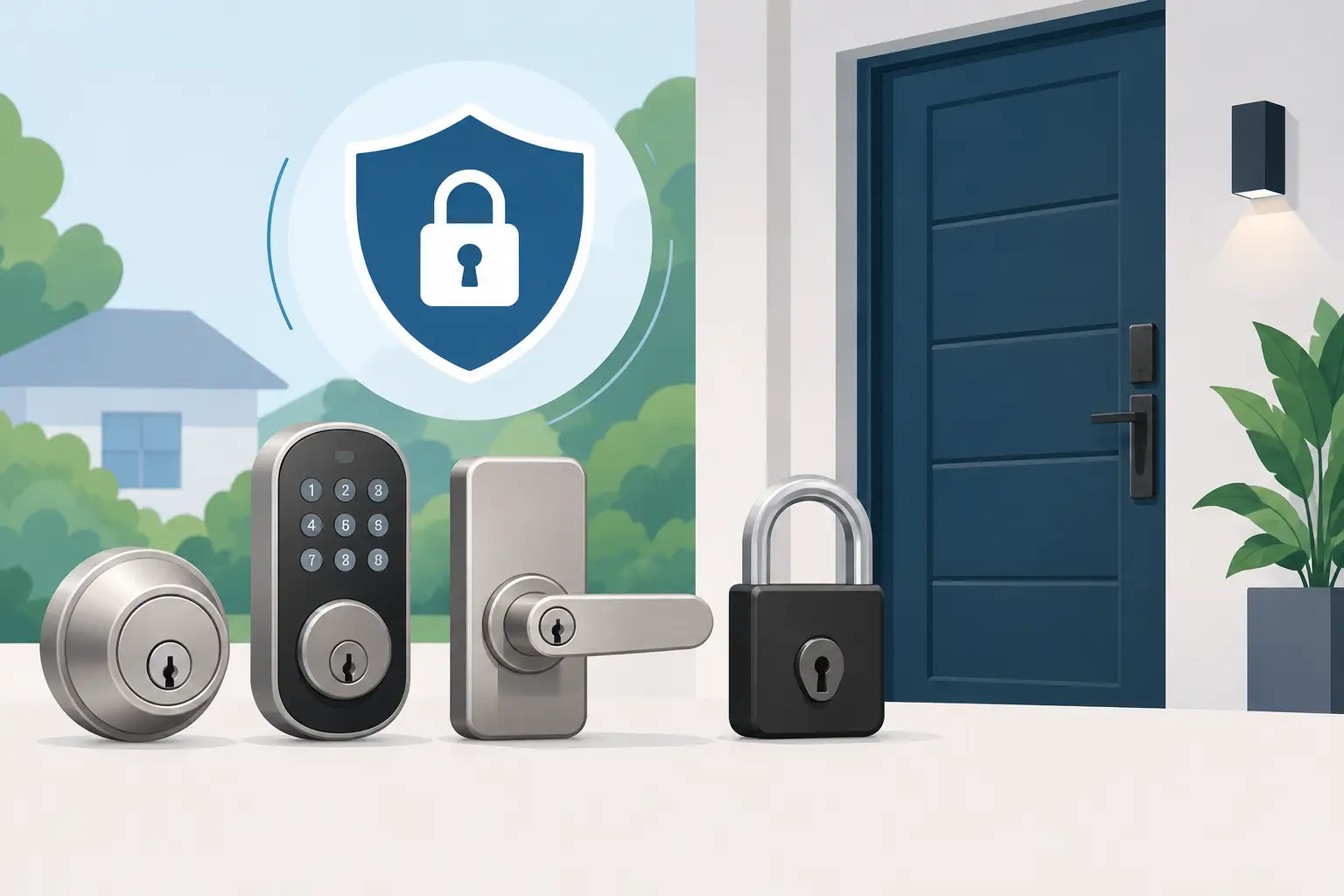
The right access method depends on your daily routine. Traditional keyed deadbolts remain a dependable, straightforward option. They do not rely on batteries, Wi-Fi, apps, or user codes. They are often ideal for homeowners who want simple operation and proven mechanical security.
Keypad locks replace or supplement physical keys with a code. They are useful for families, rental properties, cleaners, dog walkers, and small businesses because codes can be changed without making new keys. The trade-off is that battery maintenance matters. Choose a model with a low-battery warning and a reliable backup entry method.
Smart locks can offer code management, activity alerts, remote access, and integration with other home or business systems. These features can be helpful when you need to let in a contractor while away, manage short-term access, or confirm that a door has been secured. However, not every smart lock offers the same quality, privacy controls, or compatibility with your door and existing hardware.
Before installing a smart lock, confirm whether it works with your deadbolt type, door thickness, Wi-Fi setup, and preferred phone system. Also consider who will manage the account and credentials. For many properties, a quality keypad deadbolt provides the right balance of convenience and simplicity without adding more technology than necessary.
Consider Key Control Before Buying a Lock
Key control is often overlooked until keys go missing. If several people have copies of a standard house or business key, you may not know who still has access after a move, employee turnover, divorce, tenant change, or lost keyring.
Rekeying is often a practical alternative to replacing a working lock. A locksmith changes the internal pin configuration so old keys no longer operate the lock, and new keys are issued. This can be especially valuable after purchasing a home, moving into a rental, or taking over a commercial space.
For businesses, restricted key systems may offer better control than ordinary keys that can be copied at many retail locations. Depending on the operation, a master key system can also allow managers to access multiple doors while limiting employee access to only the areas they need.
How to Choose Door Locks for a Business
Commercial locks need to withstand repeated use while giving owners control over who can enter. A quiet professional office, a retail storefront, and a warehouse do not have the same needs.
A business with several employees may benefit from commercial-grade lever locks, panic hardware where required, keypad access, or an electronic access control system. The right choice depends on occupancy requirements, the number of doors, employee turnover, and whether access needs to be tracked by time or user.
Avoid choosing commercial hardware solely by appearance or the lowest upfront cost. A light-duty lock on a high-traffic door can wear out quickly, create access problems, and lead to more service calls. Commercial-grade hardware costs more at installation, but it can provide better durability and more reliable operation over time.
For a storefront or office, consider after-hours security as well. Glass doors, aluminum frames, rear exits, and delivery entrances may require different hardware than a standard residential wood door. A site evaluation can identify gaps that are not obvious when shopping online or in a hardware aisle.
Do Not Ignore Installation Quality
Even a well-made lock can be compromised by poor installation. Incorrect drilling, loose mounting screws, a misaligned latch, or an improperly fitted strike plate can make the hardware difficult to use and reduce security.
Professional installation is particularly valuable for high-security deadbolts, smart locks, commercial hardware, and doors that are already sticking or sagging. It also helps ensure the lock operates smoothly without damaging the door, frame, or weatherstripping.
If you are replacing locks after a break-in, lost keys, or a tenant turnover, ask whether rekeying, lock replacement, reinforced hardware, or a combination of these services makes the most sense. The correct answer depends on the condition of the current locks and the reason security needs to change.
Choose Protection That Fits Your Life
The best door lock is not always the most expensive model or the one with the longest feature list. It is the lock that matches the door, provides the right level of resistance, allows safe exit, and gives you manageable control over access.
If you are unsure what your current locks can handle, Advance Locksmith Inc can assess your doors and recommend practical options for your home or business. A properly selected and installed lock gives you more than a working key – it gives you confidence each time the door closes behind you.