

Access Control System Installation Guide

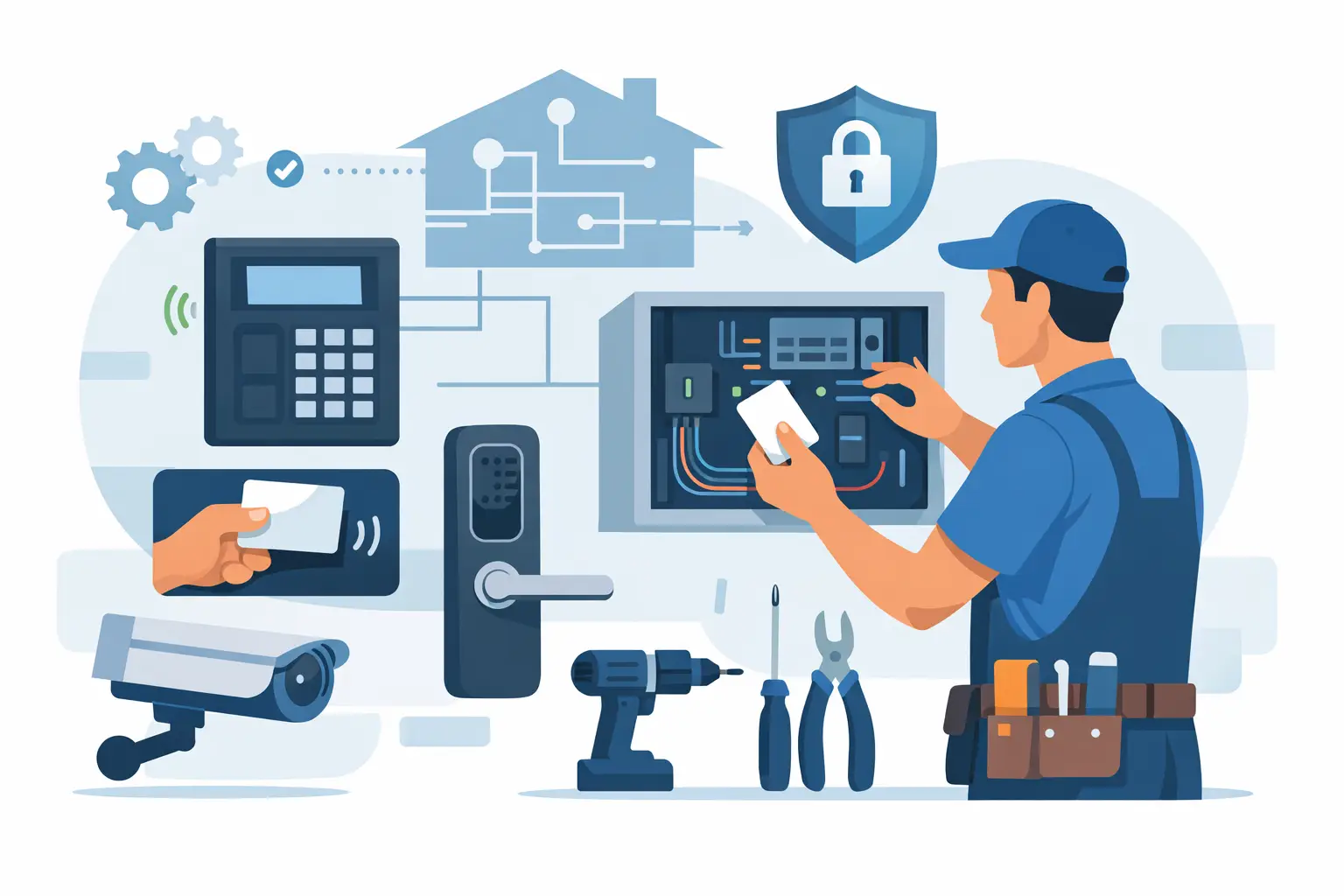
If you are still handing out physical keys to every employee, tenant, or vendor, you already know how quickly control can slip. A single lost key can turn into a rekey job, a security concern, and a disruption to your day. That is why more property owners are asking about access control system installation as a practical way to manage who can enter, when they can enter, and how that access is tracked.
For many Raleigh-area businesses, and even some multi-entry residential properties, access control is less about high-end tech and more about reducing daily headaches. You want to avoid unauthorized entry, stop relying on copied keys, and make it easier to add or remove access without replacing hardware every time someone leaves. When the system is planned and installed correctly, it gives you tighter control without making entry harder for the people who belong there.
What access control system installation actually includes
A lot of customers picture one keypad on one door. In reality, access control system installation can be as simple or as involved as the property requires. Some setups only manage a single front office entrance. Others cover multiple exterior doors, interior restricted areas, gates, and common spaces.
The installation usually starts with the door itself. The door frame, strike, lock type, power supply, and traffic level all matter. A solid system is not just a reader mounted on the wall. It is a combination of credentials, locking hardware, door release mechanisms, wiring or wireless communication, and programming that works together reliably every day.
Most systems use one or more credential types, such as key cards, fobs, PIN codes, or mobile access. The right choice depends on how the space is used. A small office may prefer cards or fobs because they are simple to issue and deactivate. A property with frequent staff changes may want mobile credentials to avoid collecting devices back. A higher-security area may combine card access with a PIN for added control.
Why businesses are moving away from traditional keys
Traditional keys still have their place, but they come with limits. Once a key is copied or lost, you no longer know exactly who can enter. Even in well-run businesses, keys get shared, borrowed, and forgotten. Over time, that creates blind spots.
Access control changes that. You can assign credentials to specific people, restrict them to certain times or doors, and remove access quickly when needed. That matters for offices, retail stores, warehouses, churches, medical spaces, and apartment common areas. It also helps with internal security, not just exterior entry.
There is also a convenience factor that should not be overlooked. Managers do not want to chase down keys after turnover. Staff do not want to wait outside because the one person with the right key is late. Property owners do not want to rekey the building every time control is uncertain. In many cases, the savings in time and disruption justify the upgrade as much as the security benefit does.
Choosing the right access control system installation for your property
Not every building needs the same system, and this is where many decisions go wrong. People sometimes shop by reader style or app features first, when the better place to start is with the property itself.
A busy commercial storefront has different needs than a private office suite. A multi-tenant building may need shared access at one entrance and tighter control for individual tenant areas. A warehouse may need to control both employee doors and delivery access. For some sites, a standalone system works fine. For others, a networked system makes more sense because it allows centralized management and activity logs across multiple entries.
Your door hardware also matters. Some doors can accept electric strikes with minimal modification. Others may require magnetic locks, electrified locksets, panic hardware integration, or closer adjustments to operate correctly. If the door does not close and latch consistently, even the best access system will underperform. Good installation is not just about the electronics. It is about making the whole opening function the way it should.
What happens during installation
A professional installation starts with an on-site assessment. This is where an experienced technician checks the doors, frames, current locks, wiring paths, traffic patterns, and any code or life-safety concerns. It is also the stage where you decide who needs access, which doors should be controlled, and how you want the system managed.
After that comes equipment selection and layout. Readers must be placed where they are easy to use but protected from damage or misuse. Power supplies and controllers need secure locations. If the system is wired, cable routing has to be planned carefully so it is protected and reliable. If the system is wireless or cloud-managed, signal strength and network stability still need to be considered.
Then comes the physical install, programming, and testing. Every credential should work as intended. Every door should release properly and secure again after entry. Request-to-exit devices, door position sensors, and any connected alarms should be checked. This part matters because small setup mistakes can create big frustrations later, especially on high-traffic doors.
Common mistakes to avoid
One of the biggest mistakes in access control system installation is underestimating the door. Customers sometimes focus on software features and forget that the opening itself has to support the system. A sagging door, damaged frame, weak closer, or misaligned latch can cause repeated lock failures and false alarms.
Another common issue is choosing a system that is too limited. A cheap standalone keypad might seem fine today, but if you add employees, need audit trails, or want to manage more than one door, it may fall short fast. On the other hand, not every property needs a large enterprise setup. Overspending on features you will never use is not smart either.
There is also the issue of future changes. Businesses grow, tenants change, and security priorities shift. A good system should leave room for expansion when possible. That does not mean buying the most advanced option available. It means selecting hardware and software that fit your current needs without boxing you in.
Access control for small businesses and mixed-use properties
Small and mid-sized businesses often assume access control is only for large facilities. That is not the case. In fact, smaller operations can benefit quickly because they usually have fewer people managing security and less time to deal with key-related problems.
An office with one main entry and one private records room may only need a straightforward two-door system. A salon, clinic, or retail business may want controlled employee-only areas and timed access for staff. Mixed-use properties may need one setup for management and another for residents or tenants. The right design keeps things simple for users while still giving the owner more control.
For local property owners, it also helps to work with a locksmith who understands both electronic access and mechanical door security. These systems do not exist in a vacuum. They work best when the locks, doors, closers, exit devices, and access components are treated as one security system, not separate pieces.
Maintenance and long-term reliability
Installing the system is only part of the job. Ongoing reliability depends on maintenance, user management, and occasional updates. Credentials need to be added and removed properly. Batteries, backup power, and connected hardware should be checked. Doors that start sticking or drifting out of alignment should be fixed before they create bigger issues.
This is especially true for properties with heavy daily traffic. A system can be programmed correctly and still have problems if the physical hardware wears down. That is why service support matters. When an entry point is not working, you need a fast response and a technician who can diagnose whether the issue is electrical, mechanical, or both.
Advance Locksmith Inc works with customers who need that practical balance – secure entry, dependable hardware, and support when something needs attention. For businesses and property owners in Raleigh and nearby communities, that local service can make a real difference when time matters.
Is access control worth it?
For most properties dealing with staff turnover, shared access, lost keys, or sensitive areas, the answer is yes. The value is not only in stronger security. It is in better control, less guesswork, and fewer interruptions to your day.
Still, the right setup depends on your building, your traffic, and your budget. A one-door office does not need the same system as a multi-entry commercial property. What matters most is choosing a solution that fits the way your property actually operates.
A good access control system should make your building easier to manage and harder to misuse. When installation is done correctly, you feel that difference every day – not because the system calls attention to itself, but because the right people get in, the wrong people do not, and your security feels a lot less uncertain.