
Best Locks for Storage Units That Stop Break-Ins

A storage unit can hold the things that matter most when space runs short – furniture, family keepsakes, business inventory, tools, and documents. The best locks for storage units are not simply the biggest padlocks on the shelf. They are locks that fit the unit’s latch correctly, resist common theft methods, and remain dependable through Raleigh-area heat, rain, and humidity.
Many storage break-ins are crimes of opportunity. A thin, exposed-shackle padlock can give a thief a quick target. Choosing the right lock adds time, noise, and difficulty to any forced-entry attempt, which can make your unit far less appealing than an easier one nearby.
Start With Your Storage Unit Door
Before buying a lock, inspect the door hardware at your facility. Most traditional storage units use a roll-up door with a metal latch or hasp. The latch may accept a standard padlock, but it may also be designed for a specific disc lock or cylinder lock. A lock that is too large may not close through the opening. One with too much clearance can leave its shackle exposed to bolt cutters.
Ask the facility manager whether it has lock requirements. Some locations recommend disc locks, while others use an enclosed cylinder system supplied by the facility. Confirm that your lock is approved before moving your belongings in. A good lock is only useful if the door can latch completely.
Also look at the surroundings. An indoor climate-controlled unit faces different conditions than an outdoor drive-up unit. Outdoor units need better corrosion resistance because moisture can seize inexpensive locks and leave you unable to access your own property.
The Best Locks for Storage Units by Type
The right choice depends on your unit door, what you are storing, and how often you need access. For most renters, a high-quality disc lock is the strongest all-around option. For certain facility doors, a cylinder lock is even better. Standard laminated padlocks can work for low-risk situations, but they should not be the default for valuable property.
Disc locks offer the best everyday protection
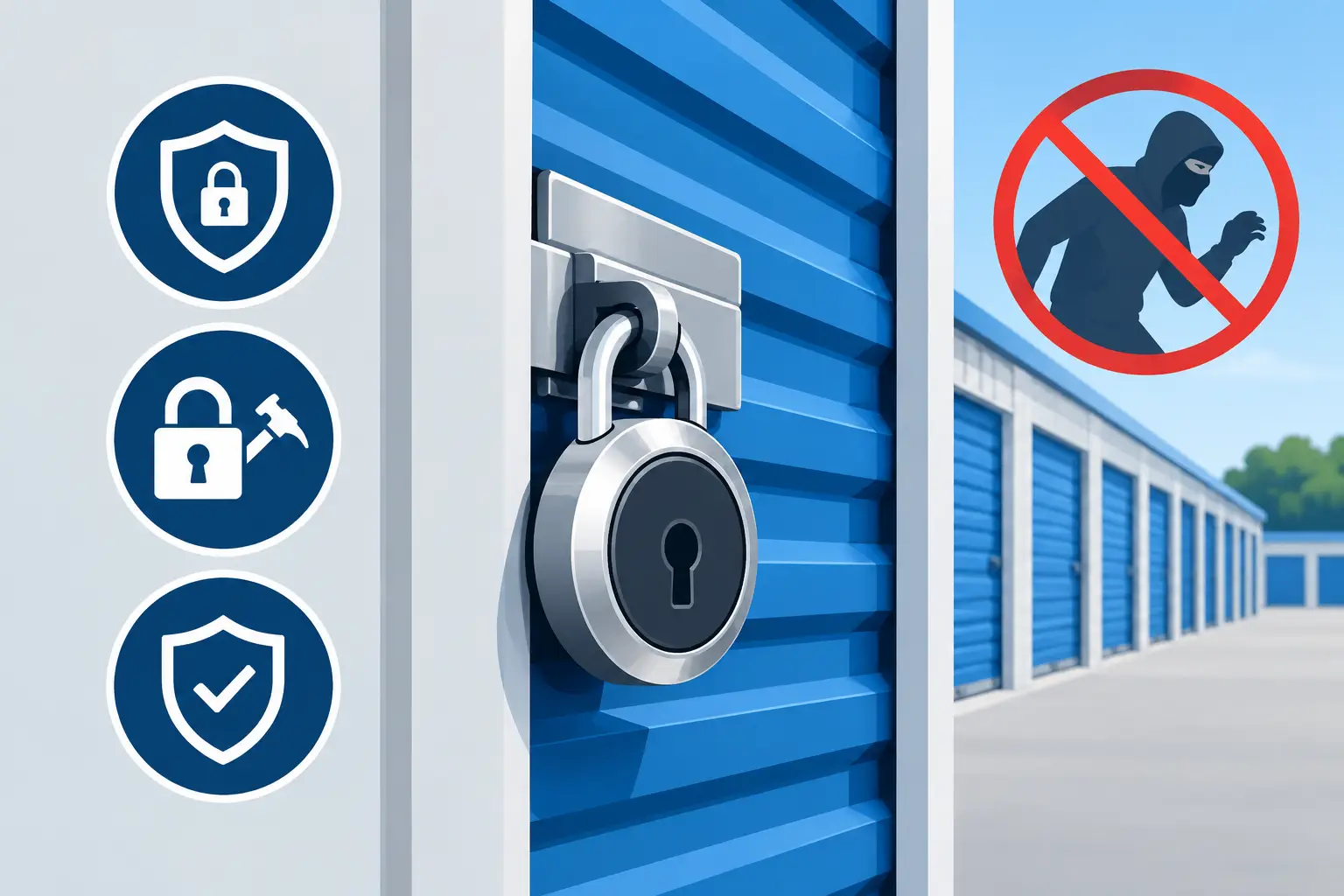
A disc lock has a round, stainless-steel body and a heavily shielded shackle. Only a small portion of the shackle is visible, leaving much less room for bolt cutters or pry tools. That design is why disc locks are widely recommended for roll-up storage doors.
Look for a disc lock made from hardened or stainless steel, with a shackle that fits snugly through the latch. A tighter fit matters. If there is excessive space around the shackle, a thief has more room to insert cutting or twisting tools.
Disc locks are also a practical choice for outdoor storage units because stainless steel resists rust. Still, no lock is maintenance-free. If it is exposed to frequent rain or road dust, use a lock lubricant made for cylinders and keep the keyway clear.
Cylinder locks provide excellent shackle-free security
Some facilities use a round cylinder lock that slides directly into the storage door latch. Because there is no exposed shackle, it offers very little for cutters to grab. When the door is built for it, a cylinder lock is one of the most secure options available.
The limitation is compatibility. You cannot use a cylinder lock on every storage unit door, and some facilities require their own lock model. Never force a cylinder into a latch that was not designed for it. If you are unsure, a professional locksmith can help identify the correct lock type and evaluate the door hardware itself.
Hidden-shackle padlocks are a strong alternative
Hidden-shackle padlocks place the shackle inside a thick metal body. They are generally rectangular rather than round and are designed to resist cutting and hammering. They are a good choice where a disc lock does not fit but the latch still allows a shielded design.
These locks tend to be larger and more expensive. Check measurements carefully, especially on narrow hasps. The strongest lock in the store is not necessarily the best one if it cannot seat fully against the door.
Traditional padlocks have a limited role
A basic brass or laminated steel padlock is better than leaving a unit unsecured, but it is not the best choice for high-value storage. Standard exposed shackles are easier to cut, and low-cost lock bodies may be vulnerable to prying or drilling.
If you use a traditional padlock, choose one with a hardened boron alloy shackle, a solid body, and a high-security keyway. Avoid lightweight combination locks for storage units containing anything you would be upset to lose. Combination mechanisms can be convenient, but many consumer models do not offer the same resistance as a quality keyed lock.
Features That Matter More Than Brand Names
Security ratings and materials tell you more than packaging claims. A dependable storage lock should have a solid, weather-resistant body and a hardened shackle or shackle-free design. The locking mechanism should resist pulling and twisting, not just casual handling.
Pay attention to these practical features when comparing locks:
- A shielded or hidden shackle that limits access for bolt cutters
- Hardened steel or boron alloy components that resist cutting
- Stainless steel or protective coatings for outdoor weather exposure
- A restricted or high-security keyway that is harder to pick or duplicate casually
- A snug fit through the unit latch, with minimal open space around the lock
A heavier lock can be a positive sign, but weight alone does not prove quality. A well-designed disc lock may outperform a bulkier lock with an exposed shackle. Focus on the complete design and how it fits your specific door.
Match Security to What Is Inside
Not every storage unit needs the same level of protection. Seasonal patio furniture and boxed household items may call for a quality disc lock. A unit containing contractor tools, retail inventory, collectibles, business records, or irreplaceable family items deserves stronger protection and additional layers of security.
For higher-value contents, choose a cylinder or high-security disc lock, select a facility with controlled gate access and cameras, and consider storage insurance. Check the policy details carefully. Insurance may exclude certain valuables or require proof of ownership, so photographs and an inventory list can save trouble later.
Do not advertise what is in the unit. Avoid leaving branded tool cases, electronics boxes, or visible inventory near the door while loading. If possible, place the most valuable items toward the back and use covered shelving or plain moving blankets to keep contents out of sight when the door is open.
Smart Locks: Convenient, but Check the Conditions
Bluetooth and keypad padlocks can eliminate the need to carry a key. They can be useful when multiple family members or employees need access, and some models keep an access history. That convenience comes with trade-offs.
Electronic locks need battery power, and outdoor storage conditions can be hard on electronics. A dead battery, a damaged keypad, or poor phone connectivity can create an access problem at the worst time. Some facilities also prohibit smart locks because staff may need a straightforward way to verify occupancy or respond to an emergency.
If you choose a smart lock, select one rated for outdoor use, keep a backup access method, and confirm that the storage facility permits it. For most individual renters, a quality keyed disc lock remains the simpler and more dependable answer.
Avoid These Common Storage Lock Mistakes
The biggest mistake is buying the cheapest lock available after signing a rental agreement. Another is choosing a lock based only on its advertised toughness without measuring the latch. A lock that leaves a long shackle exposed gives thieves the leverage they need.
Key control matters, too. Do not leave spare keys in a vehicle, tape one inside the unit, or hand out copies without keeping track of them. If several people require access, decide who is responsible for the key and retrieve copies when employees, roommates, or contractors no longer need entry.
Finally, check the lock occasionally. Make sure it still closes smoothly, the door latch is not bent, and there are no signs of tampering. Report damaged hardware to the facility immediately. A compromised latch can defeat even a high-quality padlock.
Get the Fit and Security Level Right
If your storage unit door is damaged, the latch will not close properly, or you are unsure which lock will provide meaningful protection, a locksmith can help before the unit becomes a problem. Advance Locksmith Inc can assess lock compatibility and recommend practical security upgrades for storage customers in Raleigh and surrounding communities.
The best choice is the lock that fits tightly, resists attack, and suits the value of what you have stored. Take a few minutes to inspect the door and choose quality hardware now. It is far easier than dealing with a broken lock, missing property, or a stressful call after a break-in.