

Home Lock Rekeying Guide for Raleigh Homeowners

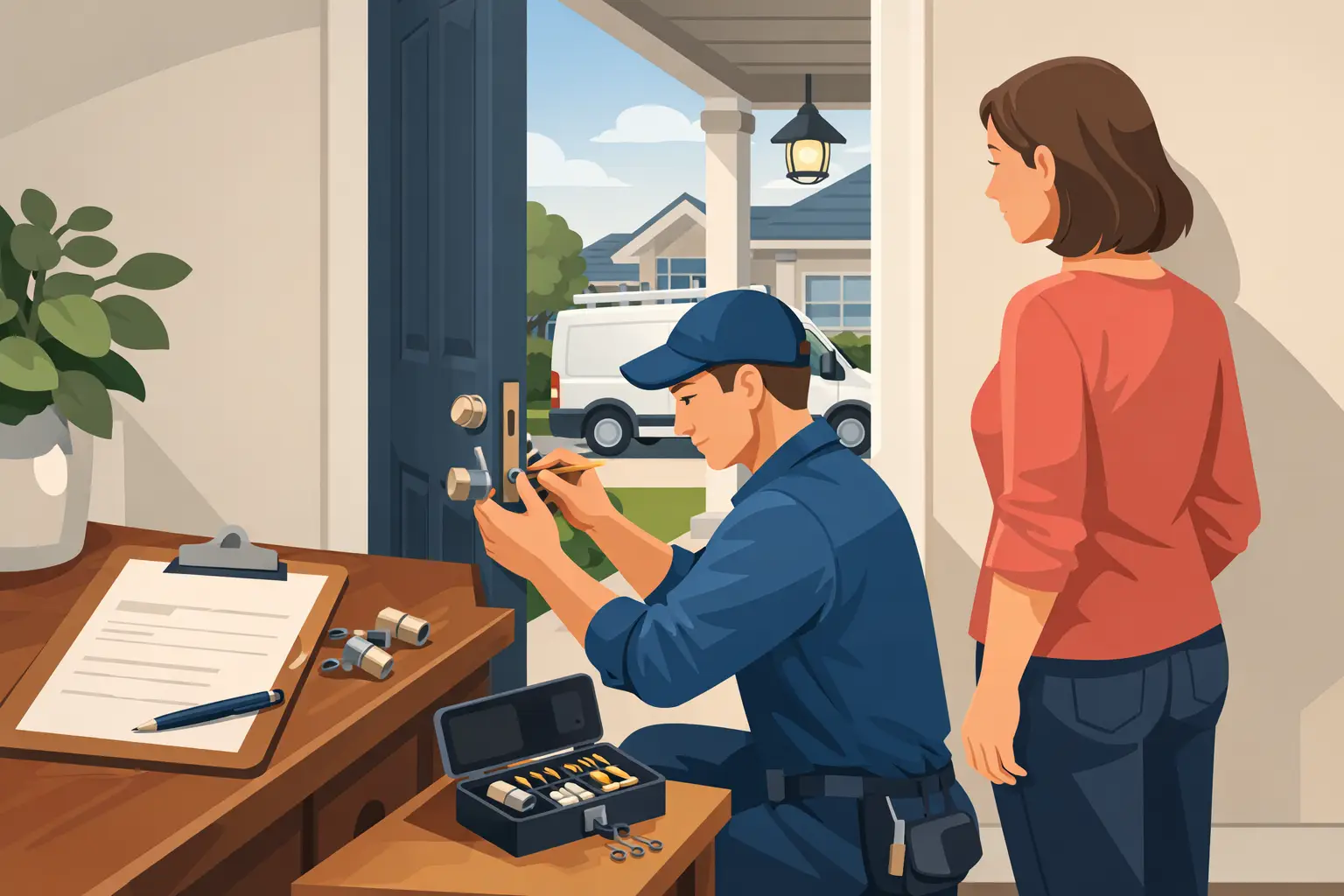
A lost house key changes the security of your home immediately, even when the lock still works perfectly. This home lock rekeying guide explains what rekeying does, when it makes sense, and when replacing the entire lock is the better decision for Raleigh-area homeowners.
Rekeying is one of the most practical ways to restore control over who can enter your property. A professional locksmith changes the internal pins in a compatible lock cylinder so old keys no longer operate it. You receive new keys, while the exterior hardware can often remain in place.
What Home Lock Rekeying Actually Changes
Every standard keyed lock is built around a cylinder containing small internal components that match the cuts on a key. When a locksmith rekeys that cylinder, those components are reset to match a new key pattern. The old key may still fit into the keyway, but it will not turn the lock.
That distinction matters. Rekeying changes key access, not the physical strength, condition, or style of the lock. If your deadbolt is solid, properly installed, and in good condition, rekeying can be a cost-conscious security improvement. If the lock is worn, damaged, loose, or low quality, replacement may provide better protection.
A professional can often rekey several compatible locks to work with one new key. For many homes, that means the front door, back door, garage entry, and side door can be simplified without giving up security. Compatibility depends on the lock brands, keyways, and existing hardware.
When You Should Rekey Your Home Locks
The best time to rekey is usually after a change in access, not after a break-in. Acting early removes uncertainty and prevents former keys from becoming a security problem later.
You should strongly consider rekeying after moving into a new house. Even if the seller turns over every key they have, you cannot know whether relatives, contractors, neighbors, pet sitters, or previous occupants still have copies. Rekeying provides a clean starting point for your household.
It is also a smart response when keys are lost or stolen. A lost key is more concerning if it was attached to anything identifying your address, left near your home, or taken with a purse, wallet, or vehicle documents. If you suspect a key could be connected to your property, do not wait to see whether it turns up.
Other common reasons include the end of a tenant arrangement, a breakup or household change, employee access to a home office, or a contractor who had keys during a project. Homeowners who have recently rented out a property should rekey between occupants rather than assume all copies were returned.
For renters, the right move depends on your lease and landlord requirements. Do not change or rekey a lock without permission if your agreement prohibits it. A landlord may need a working key for maintenance or emergency access, and a locksmith can help you understand options that maintain required access while improving your personal security.
Rekeying vs. Replacing a Lock
Rekeying and replacing solve different problems. Choosing correctly can save money without leaving a weak point at your door.
Rekeying is generally the right choice when the lock is functioning well, the hardware meets your security needs, and your main concern is that someone may have an old key. It is typically faster and less expensive than buying and installing new hardware, especially when several locks can be keyed alike.
Replacement makes more sense when a lock sticks, has visible damage, has been forced, or no longer latches correctly. It is also the better option if you want to move from a basic lock to a higher-security deadbolt, upgrade to a keypad or smart lock, change the finish, or correct a poor installation.
A lock can look fine and still deserve replacement. Older hardware may have a weak deadbolt, a loose strike plate, short mounting screws, or a worn cylinder that is difficult to operate. A locksmith can inspect the entire door setup, including alignment between the latch and strike, before recommending a repair, rekey, or upgrade.
If your lock was damaged during an attempted break-in, treat it as more than a key-control issue. The door frame, strike plate, hinges, and deadbolt may all need attention. Rekeying alone will not repair damage or strengthen compromised hardware.
What to Expect During a Rekey Service
A professional home rekey service begins with identifying the locks on each exterior entry. The technician checks whether they can be rekeyed, whether they can be keyed alike, and whether any hardware needs repair. You can decide which doors should use the same key and whether certain spaces, such as a detached garage or storage area, should remain separate.
The locksmith then removes the appropriate lock cylinders, changes the internal configuration, cuts new keys, and tests each lock. The work should include checking that the key turns smoothly from both sides and that the door locks correctly when closed.
Before the technician leaves, test every new key yourself. Ask how many copies you receive and whether additional keys can be made later. Keep track of who receives a copy, particularly if you share access with family members, caregivers, cleaners, or neighbors.
For security, avoid hiding spare keys under mats, planters, fake rocks, or near the front door. A trusted person, a secure lockbox, or a properly selected keyless-entry option can be safer alternatives depending on your household’s needs.
Choosing the Right Rekeying Plan for Your Property
A basic rekey may be enough for a newer home with quality deadbolts. But properties differ, and the right plan depends on how the home is used and who needs access.
Families often prefer one key for primary exterior doors and a separate key for sheds, gates, or outbuildings. Homeowners with frequent service providers may want limited-access solutions rather than handing out permanent copies. A keypad deadbolt can eliminate some key-sharing concerns, though it requires responsible code management and occasional battery checks.
If you run a business from home or store valuable equipment on the property, consider whether standard residential hardware is sufficient. Higher-security locks and controlled key systems may be worthwhile when key duplication control and resistance to common forced-entry methods are priorities.
Older Raleigh homes can present their own challenges. Settling, humidity, painted-over hardware, and door alignment issues can make a lock feel unreliable even when the cylinder is serviceable. In those cases, a technician may recommend adjusting the door or replacing selected components along with rekeying.
How Much Does Rekeying Cost?
The cost of rekeying depends on the number and type of locks, the condition of the hardware, whether locks can be keyed alike, and the timing of service. Emergency calls, specialty cylinders, high-security systems, and locks that require repair can affect the price.
The lowest price is not always the best value. Ask whether the quote covers service, rekeying, new keys, and testing. A clear estimate helps prevent surprises and gives you the chance to compare rekeying against replacement before work begins.
Be cautious of vague advertisements that promise an unusually low starting price without explaining additional charges. Choose a licensed, local locksmith who can identify the hardware in person and provide a straightforward recommendation based on your home, not a one-size-fits-all answer.
When to Call a Locksmith Right Away
Call for professional help promptly if your keys were stolen with identifying information, you believe someone entered your home without permission, or a lock has been damaged. If you are locked out, avoid forcing the door, drilling the lock, or trying improvised methods that can damage the hardware and create a larger repair.
Advance Locksmith Inc provides mobile residential locksmith service for homeowners in Raleigh and nearby communities, including urgent lockouts, rekeying, key replacement, and lock upgrades. A trained technician can assess the condition of your locks and help you choose a solution that protects your home without replacing hardware that is still doing its job.
Your keys may be small, but control over them is a major part of home security. If access has changed or a key is unaccounted for, rekeying your locks promptly can replace uncertainty with a clear, dependable security plan.