
How to Secure Rental Property Locks Safely

A rental turnover can leave more than paint touch-ups and cleaning on your checklist. It can also leave unknown keys in circulation. Learning how to secure rental property locks protects your tenants, reduces liability, and helps preserve the value of the property from the moment a new lease begins.
For landlords and property managers, the goal is not simply to install the toughest lock available. Effective rental security combines reliable hardware, controlled access, clear lease rules, and prompt action when a key is lost or a tenant moves out. The right approach depends on the building, the neighborhood, the number of units, and who needs access for maintenance or emergencies.
Start Every Turnover With Rekeying
Rekeying should be one of the first tasks completed after a tenant moves out. A locksmith changes the internal key configuration of the existing lock so old keys no longer work, while the lock hardware can remain in place. It is usually more cost-effective than replacing every lock and gives the next tenant a fresh start.
Do not rely on a former tenant’s statement that all keys were returned. Copies may have been made for relatives, friends, pet sitters, cleaners, or previous roommates. Even when a tenant is completely trustworthy, you cannot account for every duplicate key that may have changed hands.
Rekey exterior doors, garage entry doors, storage areas, mailbox locks when applicable, and any shared spaces that use a common key. If you manage multiple units, consider setting a consistent turnover policy rather than deciding case by case. Consistency protects tenants and makes your management process easier to document.
Rekeying vs. Replacing Locks
Rekeying is a smart choice when the existing lock is in good condition, meets your security needs, and works properly. Replacement makes more sense when the lock is worn, damaged, outdated, or incompatible with a better access system.
A loose deadbolt, a latch that does not fully catch, visible corrosion, or a key that sticks are all signs that replacement may be the safer option. Rekeying a poor-quality lock does not correct weak hardware or a failing door frame. A professional locksmith can inspect the full opening and recommend whether the lock can be retained or should be upgraded.
Choose Hardware That Matches the Property
For most rental homes and apartments, a quality deadbolt on each exterior entry door is the basic standard. The deadbolt should extend fully into a reinforced strike plate secured with long screws that reach the wall framing. This matters because a strong lock alone cannot compensate for a weak strike plate or soft, damaged door frame.
Look beyond the lock cylinder. Check whether the door is solid, whether hinges are secure, and whether there is a gap that allows the door to shift when closed. On outward-swinging doors, exposed hinges may need security hardware. Sliding glass doors need their own protection, such as a properly fitted secondary bar or pin, because the standard latch is rarely enough by itself.
High-security deadbolts can be a worthwhile upgrade for single-family rentals, properties with recurring unauthorized-entry concerns, or units that store valuable equipment. These locks can provide stronger resistance to picking, bumping, and unauthorized key duplication. They cost more than standard hardware, so they are most useful where the risk and property value justify the investment.
Consider Keyless Entry Carefully
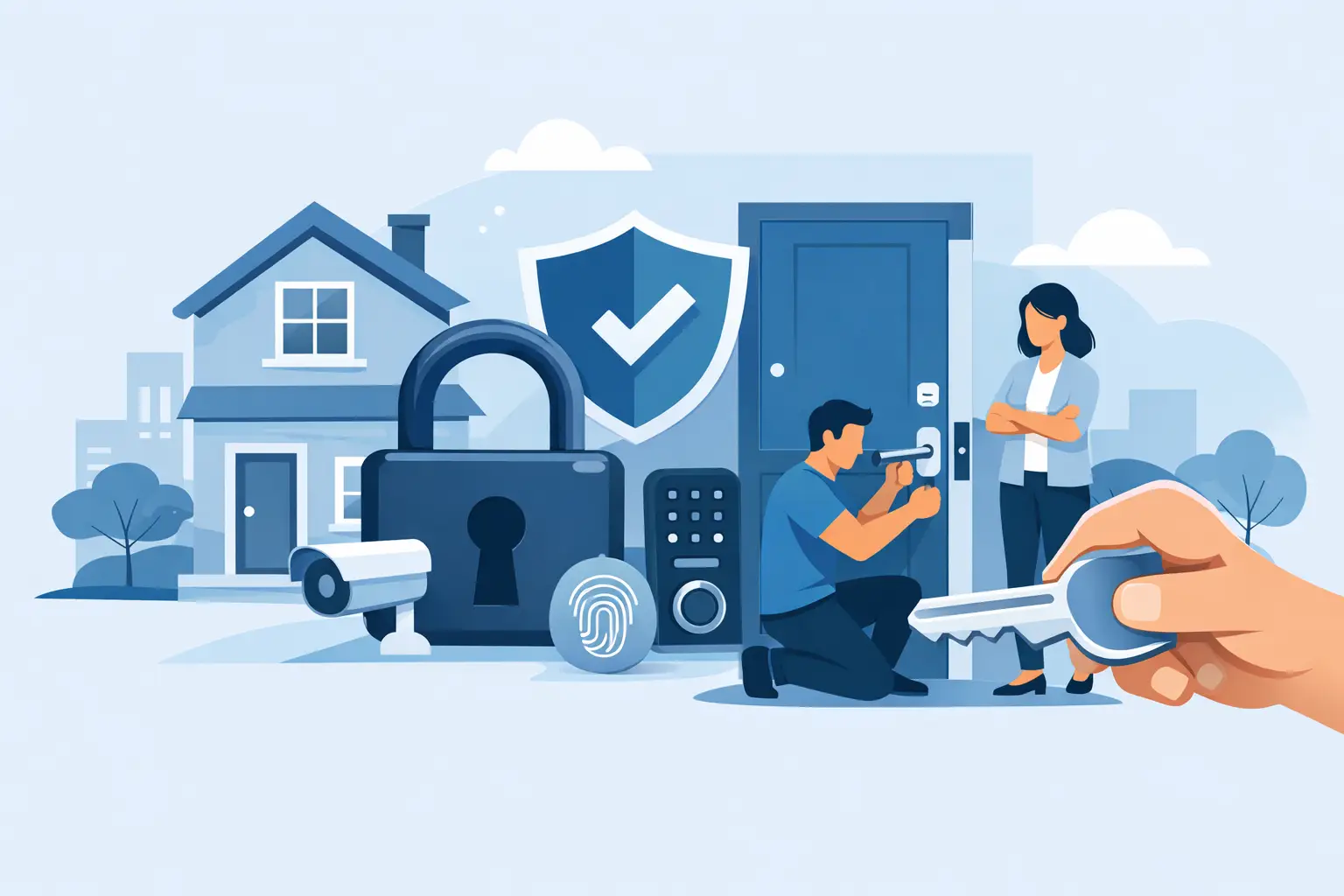
Smart locks and keypad locks can simplify turnover because you can change or remove a code without rekeying the cylinder after every tenancy. They can also reduce the need for physical key handoffs and make it easier to provide temporary access to vendors.
However, keyless systems require management. Use unique codes for each tenant, delete old codes immediately after move-out, and avoid using obvious numbers such as unit addresses or birth years. Keep a reliable backup method for power failure, battery failure, or malfunction. A mechanical key override, documented emergency procedure, and regular battery checks are practical safeguards.
For a small rental portfolio, a keypad deadbolt may be enough. Larger properties or buildings with frequent vendor access may benefit from a managed access-control system. The right system should make access easier to control, not create confusion for tenants or maintenance staff.
Control Who Has Keys and Codes
Security weakens quickly when no one knows how many keys exist. Establish a simple key-control process for every rental unit. Record the number of keys issued to each tenant, identify who holds management and maintenance keys, and require approval before a key is copied.
A restricted key system can offer added control because duplicate keys are more difficult to obtain without authorization. This can be especially valuable for landlords with multiple properties, commercial rentals, or homes where several contractors need periodic access.
Keep master keys protected and limit access to people who genuinely need them. A master-key system is convenient for maintenance, but it also carries greater risk if a key is lost. Never label a master key with a property address or unit number. Store key records securely and update them whenever staff, vendors, or tenants change.
If a tenant reports a lost key, stolen key, domestic dispute, or concern that someone may have copied a key, treat it seriously. The appropriate response may be rekeying that unit immediately. Quick action can prevent a stressful situation from becoming a break-in or unauthorized-entry claim.
Secure Doors, Windows, and Secondary Entrances
Locks work as part of a complete entry system. A back door with a weak frame, an unsecured basement window, or an attached garage door can offer an easier path than the front entrance. During inspections, check every accessible opening rather than focusing only on the main door.
Make sure window locks close and latch properly. Repair damaged screens, broken frames, or windows that do not lock. For ground-floor and basement windows, consider approved secondary security measures where appropriate, while maintaining required emergency escape routes. Bedroom egress windows must remain usable in an emergency, so avoid solutions that trap tenants inside.
For vacant properties, inspect doors and windows more often. Vacancies attract attention, particularly when mail accumulates, lights remain off, or contractors come and go. Rekey promptly, secure lockboxes, and do not leave keys hidden near the property. A hidden key under a mat, planter, or utility box is often the first place an unauthorized person will check.
Put Access Rules in the Lease
Good security requires clear expectations. Your lease should address key and code use, lost-key reporting, unauthorized lock changes, and access procedures for maintenance or emergencies. Tenants should understand that they cannot give out keys or codes to others without permission and that they must report broken locks promptly.
At the same time, landlords must respect tenant privacy and applicable notice requirements before entering an occupied unit. North Carolina rules, lease language, and the circumstances involved can affect what notice is appropriate. Emergency access is different from routine maintenance. When in doubt, document the issue, communicate clearly, and follow the lease and applicable requirements.
Tenants should also know how to reach you if they are locked out, their key is stolen, or a lock fails after hours. A delay can leave someone stranded outside and may encourage unsafe attempts to force a door open. A dependable 24-hour locksmith plan is useful for urgent situations that cannot wait until morning.
Inspect and Maintain Locks Before They Fail
A lock that works today can become unreliable after months of heavy use, temperature changes, or repeated door slamming. During routine property inspections, test deadbolts, knobs, latches, closers, hinges, strike plates, and keypad function. Address small problems before a tenant is unable to secure the door.
Avoid using excessive oil or household products in a lock cylinder. The wrong lubricant can collect dirt and make the mechanism stick. If a key is difficult to turn, the issue may be door alignment, a worn key, internal lock wear, or a damaged cylinder. Forcing the key can break it and create a more expensive emergency.
For Raleigh-area landlords, seasonal humidity and older door frames can also affect alignment. If a deadbolt only works when the door is pushed or lifted, have the alignment corrected. Tenants should not have to wrestle with an exterior door to feel secure at home.
When a lock is damaged, a key is missing, or a tenant has an immediate safety concern, call a licensed local locksmith rather than delaying the repair. Advance Locksmith Inc provides professional rekeying, lock replacement, high-security upgrades, and emergency locksmith support for rental property needs. A properly secured rental starts with a door that closes firmly, locks reliably, and gives the next tenant confidence from their first night home.