

Rekeying vs Replacing Locks: Which Fits?

You just moved into a new place, a tenant moved out, or a key went missing. In moments like that, the question is not whether your security needs attention. It is rekeying vs replacing locks, and choosing the right option can save money, improve protection, and prevent future headaches.
For many homeowners and business owners in Raleigh, Cary, Apex, Durham, Garner, Mooresville, and Holly Spring, the right answer depends on what changed, how old the hardware is, and whether the current locks still do their job well. Sometimes a simple rekey is the smart move. Other times, replacing the lock is the safer long-term decision.
Rekeying vs Replacing Locks: What Is the Difference?
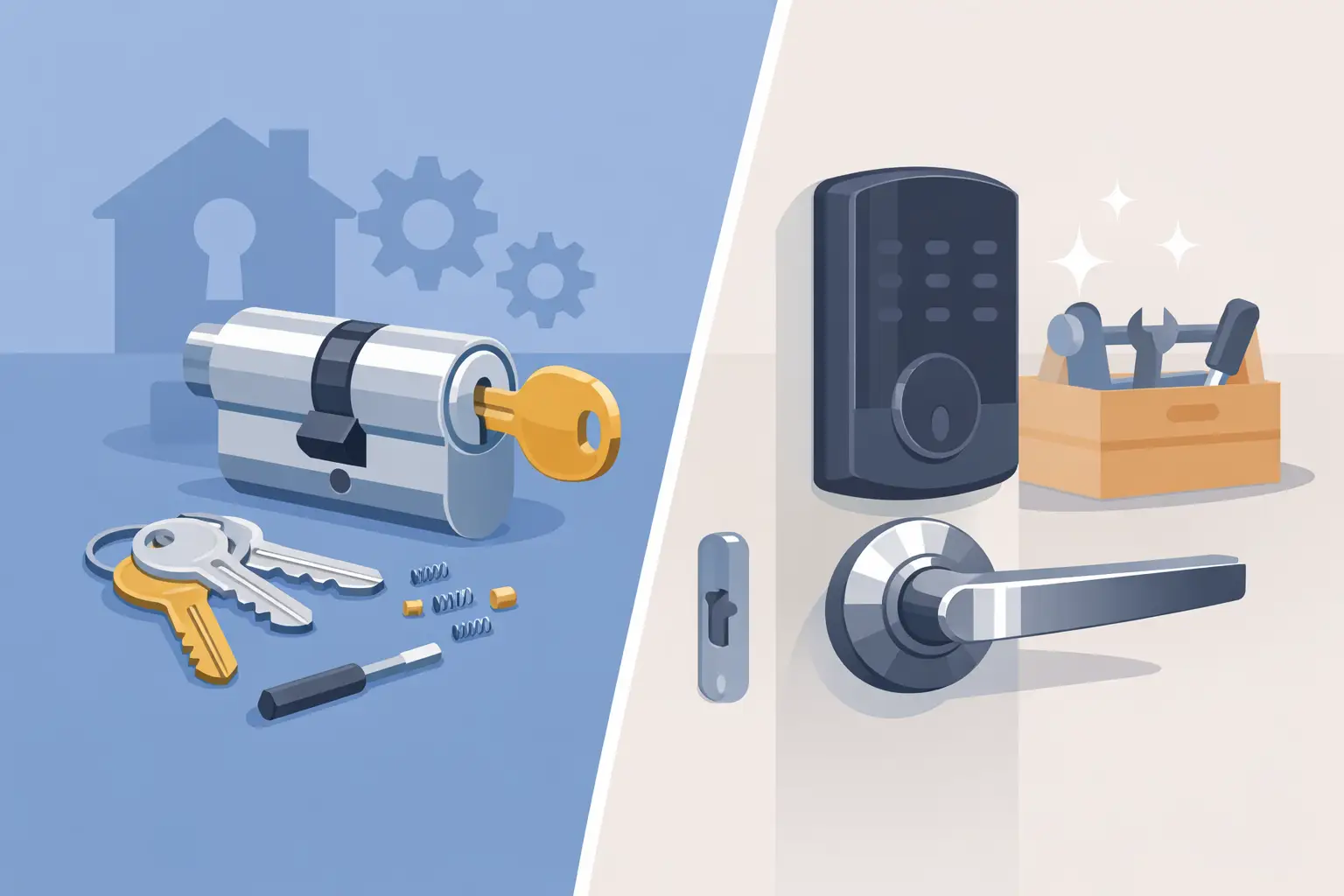
Rekeying changes the internal pins inside a lock so the old key no longer works. The lock hardware usually stays in place, but a new key is created to match the updated pin configuration. From the outside, the lock often looks exactly the same.
Replacing a lock means removing the existing hardware and installing a new one. That could be another standard lock, a higher-security deadbolt, a smart lock, or a commercial-grade option with stronger key control.
Both services solve access and security problems, but they solve different kinds of problems. Rekeying is about controlling who can use the lock you already have. Replacing is about changing the entire locking system.
When Rekeying Makes More Sense
Rekeying is usually the better choice when the lock itself is in good shape and you simply want old keys to stop working. This is common after moving into a home, after a roommate leaves, after employee turnover, or when you are not sure how many copies of a key are still out there.
It is also a practical option if you want convenience. A locksmith can often rekey multiple doors so they all work with one key, as long as the hardware is compatible. For a homeowner tired of carrying separate keys for the front door, back door, and side entry, that can be a real improvement.
Cost is another reason people choose rekeying. Because the existing hardware stays in place, labor and material costs are usually lower than full replacement. If your locks are fairly new, reliable, and meet your security needs, replacing them may be unnecessary.
That said, rekeying has limits. It does not upgrade a weak lock into a stronger one. If the hardware is worn out, low quality, damaged, or outdated, rekeying may give you key control without truly improving security.
Good situations for rekeying
A rekey is often the right call after a home purchase, a rental turnover, a breakup, a lost key, or staff changes at a small business. In those cases, the main issue is access control, not failed hardware.
For landlords and property managers, rekeying is often the most efficient way to reset security between occupants without changing every lock body. For businesses, it can also be useful when a former employee should no longer have entry but the lock system is still in solid condition.
When Replacing Locks Is the Better Option
Replacing makes more sense when the lock is damaged, worn, outdated, or no longer matches the level of security you need. If the key sticks, the cylinder is loose, the bolt does not extend properly, or the hardware has visible wear, replacement is often the safer route.
It is also the better option when you want a meaningful upgrade. Maybe your current deadbolt is basic builder-grade hardware and you want stronger residential protection. Maybe your business needs restricted key systems, panic hardware, or access control. Rekeying cannot provide features the original lock never had.
A break-in attempt is another major reason to replace. Even if the lock still works, internal damage may not be obvious at first. In those cases, installing new hardware can restore confidence and improve resistance to future attacks.
Style can matter too. If you are renovating a home or updating a storefront, replacing old hardware may be worth it for appearance, function, and security all at once.
Good situations for replacing
Replacement is usually the right answer when locks are broken, rusted, outdated, difficult to turn, or clearly low grade. It also makes sense when you want smart lock features, keypad entry, better commercial security, or matching new hardware throughout the property.
Cost Matters, but So Does Risk
When people compare rekeying vs replacing locks, price is often the first concern. In many cases, rekeying costs less because you are keeping the existing hardware. If the lock is solid and you only need to cancel old keys, that is often the most economical solution.
But the lowest immediate cost is not always the best value. If you rekey a lock that is already nearing failure, you may end up paying for another service call soon after. On the other hand, replacing every lock in a property when only one key is unaccounted for could be more than you actually need.
The best decision usually comes down to balancing cost with condition and risk. A locksmith should look at the hardware, ask the right questions, and recommend the option that fits the situation instead of pushing a larger job.
Security Level Changes the Answer
Not every property has the same security needs. A single-family home in a quiet neighborhood may need something different than a retail shop with employee turnover or a small office storing sensitive files.
For a home, rekeying is often enough after moving in or after losing a key, provided the locks are quality deadbolts in good working order. For a business, the equation can shift quickly. If several employees have had copies made over time, if keys were not tracked carefully, or if access needs to be limited by role, replacing the current system with restricted keys or electronic access may be the better investment.
This is where professional guidance matters. The question is not just whether the lock opens and closes. It is whether the current setup still fits how the property is used.
Can You Rekey Every Lock?
No, and that is where people sometimes get surprised. Many standard residential locks can be rekeyed, but not all locks are designed the same way. Some very old locks, damaged cylinders, budget hardware, or certain specialized systems may not be good candidates.
Compatibility also matters if you want one key to work on multiple doors. The locks may need to be from the same brand or use compatible cylinders. If they are not, replacement may be necessary to create a single-key system.
For businesses, master key systems add another layer. Rekeying may still be possible, but it has to be done carefully so the hierarchy of access remains intact.
What a Locksmith Will Usually Check First
A qualified locksmith will not treat every call the same. Before recommending rekeying or replacement, they will usually check the lock condition, the brand and hardware type, the age of the system, and what security concern triggered the call.
If your lock works well and the issue is simply who has a key, rekeying is often enough. If the lock is sticking, loose, outdated, or underperforming, replacement is usually the wiser move. If the issue involves both access control and a security upgrade, a combination approach may make the most sense.
For example, a homeowner might replace the front door deadbolt with a stronger model but rekey the side and back doors if those locks are still in good shape. A business might replace exterior hardware and rekey interior office locks to control costs while still improving security.
Rekeying vs Replacing Locks After an Emergency
After a lockout, lost key, stolen purse, eviction, or break-in, people often want the fastest fix available. Speed matters, but so does choosing the right fix under stress.
If keys were lost and there is no sign the hardware was compromised, rekeying may be the quickest and most cost-effective option. If the lock was forced, tampered with, or already unreliable, replacement is often the better emergency response. A fast mobile locksmith can help you secure the property immediately and recommend whether a temporary fix or a full upgrade is needed.
In urgent situations, clear advice matters as much as technical skill. That is why many local customers rely on licensed professionals who can handle both immediate access problems and long-term security improvements. Advance Locksmith Inc sees this often with home lock changes, commercial rekeys, and after-hours emergency calls where customers need reassurance as much as service.
The Better Choice Depends on the Lock and the Reason
There is no one-size-fits-all answer to rekeying vs replacing locks. Rekeying is often the right move when the hardware is good and the main goal is to block old keys. Replacing is usually the better investment when the lock is damaged, outdated, or no longer offers the level of security you want.
If you are unsure, do not guess based on price alone. The smartest move is to have the lock evaluated, understand your options, and choose the fix that protects your home, business, or vehicle without paying for more than you need. A good locksmith should make that decision feel clear, not complicated.