

Ignition Key Stuck Fix: Safe Steps for Drivers

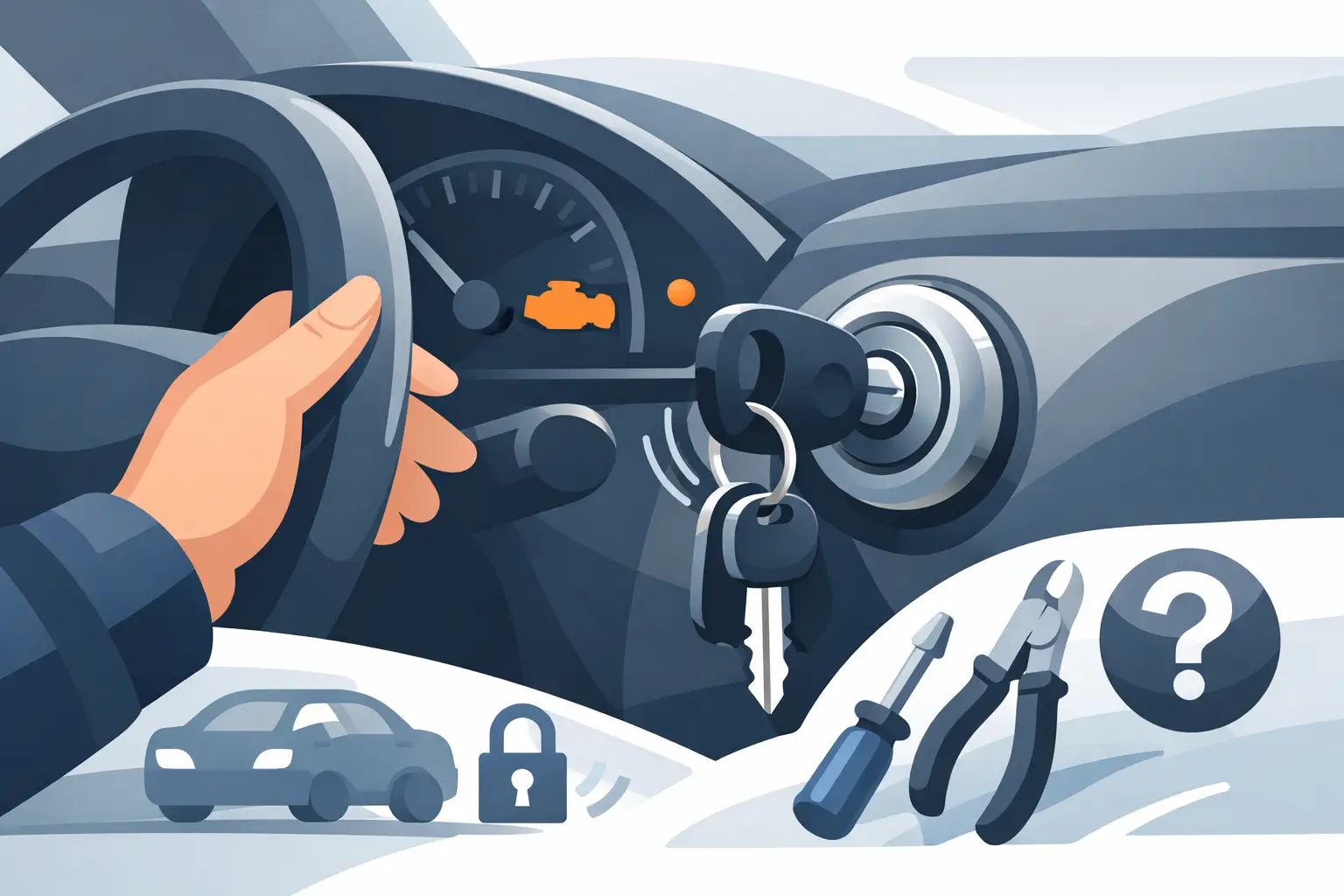
A key that will not turn or will not come out of the ignition can turn an ordinary errand into a stressful roadside problem. The right ignition key stuck fix depends on what the key is doing: a key stuck in the LOCK position has different causes than one that turns but refuses to release. Before forcing anything, take a breath, secure the vehicle, and work through a few safe checks.
Start by Identifying How the Key Is Stuck
Drivers often describe every ignition problem as a stuck key, but the details matter. Is the key inserted but unable to turn? Does it turn to ACC or ON but stop before START? Or has the engine been shut off while the key remains trapped in the ignition cylinder?
Those symptoms can point to different issues. A locked steering wheel is common and usually simple to correct. A vehicle that is not fully in Park may keep the key from releasing. A worn key, damaged ignition cylinder, weak battery, or electronic shift-interlock problem may require professional service.
Do not twist the key hard, use pliers, or strike the ignition area. Modern ignition assemblies contain small internal components and, on many vehicles, electronic security parts. Breaking the key inside the cylinder can turn a manageable service call into a more involved repair.
Ignition Key Stuck Fixes to Try First
Park in a safe place, turn on your hazard lights if needed, and set the parking brake. If the vehicle is on a slope, make sure it cannot roll before trying any of the steps below.
Relieve pressure on the steering wheel
If the steering wheel locked after parking, tension on the steering column can bind the ignition. Hold the key with light, steady pressure in the direction it normally turns. At the same time, gently move the steering wheel left and right.
One direction will usually have little or no movement, while the other may move slightly. Apply pressure toward the side that moves while gently turning the key. Do not jerk the wheel or force the key. This is often enough to release a key that will not turn in the ignition.
Confirm the vehicle is fully in Park
For an automatic vehicle, press the brake pedal and move the shifter firmly into Park. Then hold the shifter forward toward the Park position while attempting to turn or remove the key. A worn shifter, loose linkage, or misaligned park-position switch can make the vehicle think it is still in gear.
If that does not work, keep your foot on the brake and carefully move the shifter to Neutral, then back to Park. Never leave the vehicle unsecured while testing the shifter. For a manual transmission, place the transmission in neutral and fully set the parking brake before checking the key again.
Check the key itself
Look at the key under good light. A bent blade, worn grooves, cracked head, or damaged transponder housing can prevent it from moving correctly inside the cylinder. If you have a spare original key, try it once.
A spare key that works is a strong sign that the everyday key is worn or damaged. Avoid repeatedly using a failing key, especially if it has to be wiggled to start the vehicle. Key wear can damage the ignition pins over time and leave you stranded without warning.
Reduce excess weight on the key ring
Heavy key rings can place downward pressure on the key while driving. Over time, that weight may contribute to ignition-cylinder wear. Remove large key chains, tools, and other heavy items from the ring, then gently return the key to the proper position.
This will not repair a worn cylinder, but it can remove enough pressure for the key to turn or release. Once the immediate problem is resolved, consider using a lighter key ring to reduce future strain.
Verify battery power when the key will not release
Some vehicles use an electronic ignition lock or shift interlock that depends on battery power. If the dashboard is completely dark, interior lights are weak, or the vehicle recently had battery trouble, a dead battery may be part of the problem.
Check the owner’s manual for the vehicle-specific key-release or shift-lock procedure. Many models include a manual override, but its location and proper use vary. Do not pry off panels or insert objects into openings unless the manual specifically directs you to do so.
What Not to Do When the Key Is Jammed
A little patience can save you from a broken key and a damaged ignition. Skip spray lubricants unless your vehicle manufacturer specifically recommends one for the ignition cylinder. General-purpose oils can collect dust and create more sticking later. They may also affect nearby electronic components.
Do not force the key with pliers, bend it back and forth, heat it, or try to drill the cylinder. Do not continue turning the key after you feel a hard stop. These actions can snap the blade, damage the steering-column components, or leave the vehicle unable to start even after the key is removed.
If the key is already bent, cracked, partially broken, or visibly damaged, stop trying to turn it. A locksmith can assess the key and ignition before the situation becomes more expensive.
When a Stuck Ignition Key Needs a Locksmith
A professional automotive locksmith is the right next step when the simple checks do not work, the key only turns intermittently, or the key is stuck inside the ignition. Service is also recommended if you hear unusual clicking, the cylinder feels loose, the key has broken, or your spare key produces the same result.
The issue may be a worn ignition cylinder, damaged wafers inside the cylinder, a failing key, or an electronic interlock concern. The correct repair depends on the vehicle make, model, year, and ignition design. Some vehicles need a new key cut and programmed. Others may need ignition repair or replacement so the new components work correctly with the vehicle.
A qualified mobile locksmith can often come to your location, inspect the ignition, remove a stuck key without unnecessary damage, and explain the available repair options. This is especially useful when the vehicle is stranded at home, at work, in a parking lot, or after normal business hours.
Advance Locksmith Inc provides 24/7 mobile automotive locksmith service for drivers in Raleigh and surrounding communities. If your key is stuck and you cannot safely resolve it, professional help can protect both your key and your vehicle from further damage.
Preventing Another Ignition Problem
Once the key is free, do not assume the problem is gone if it happened more than once. Intermittent sticking is commonly an early warning that the key or cylinder is wearing out. Have a spare working key made before the original becomes unusable, and keep that spare separate from the daily key ring.
Use the key gently, avoid hanging excessive weight from it, and address any need to wiggle the key before starting the vehicle. If the shifter feels loose or the key only releases after moving the gear selector, have that condition checked as well. A small issue handled early is usually far less disruptive than a vehicle that will not start or cannot be shut off.
A stuck key is frustrating, but it does not always mean a major repair. Start with the safe checks, avoid force, and get professional assistance when the ignition does not respond normally. That approach gets you back on the road while protecting the parts your vehicle needs to start reliably.