
Best Commercial Door Closers for Raleigh Businesses

A door that slams can rattle an entire office, damage the frame, and create a safety concern for employees and customers. A door that will not latch can leave a business exposed after hours. The best commercial door closers prevent both problems by controlling the door through every part of its swing, from opening force to final latch.
For Raleigh-area businesses, choosing a closer is not just about finding one that fits the door. It means matching the hardware to traffic volume, door weight, accessibility needs, fire-code requirements, and the conditions around the entrance. The right closer should work quietly and reliably without employees having to think about it.
What Makes a Commercial Door Closer the Best Choice?
There is no single closer that is right for every storefront, office, warehouse, medical practice, or apartment building. A light interior office door has very different demands than a heavy exterior aluminum-and-glass entrance exposed to wind and constant customer traffic.
The best option is usually a commercial-grade hydraulic closer with the correct spring power and arm configuration. Hydraulic closers use fluid to regulate closing speed, providing far more control and durability than basic residential hardware. For busy commercial openings, look for an adjustable model built to meet ANSI/BHMA Grade 1 requirements. Grade 1 closers are designed for high-frequency use and are generally the appropriate choice for main entrances, shared corridors, and other doors that operate throughout the day.
A closer also needs to work with the complete opening. The door, hinges, frame, weatherstripping, lock, latch, threshold, and access-control equipment all affect how well it performs. Installing a high-quality closer on a warped door or a misaligned frame will not solve the underlying issue.
The Best Commercial Door Closers by Application
Rather than choosing by brand name alone, start with where and how the door is used. This makes the selection process faster and helps avoid paying for features your property does not need.
High-Traffic Storefronts and Main Entrances
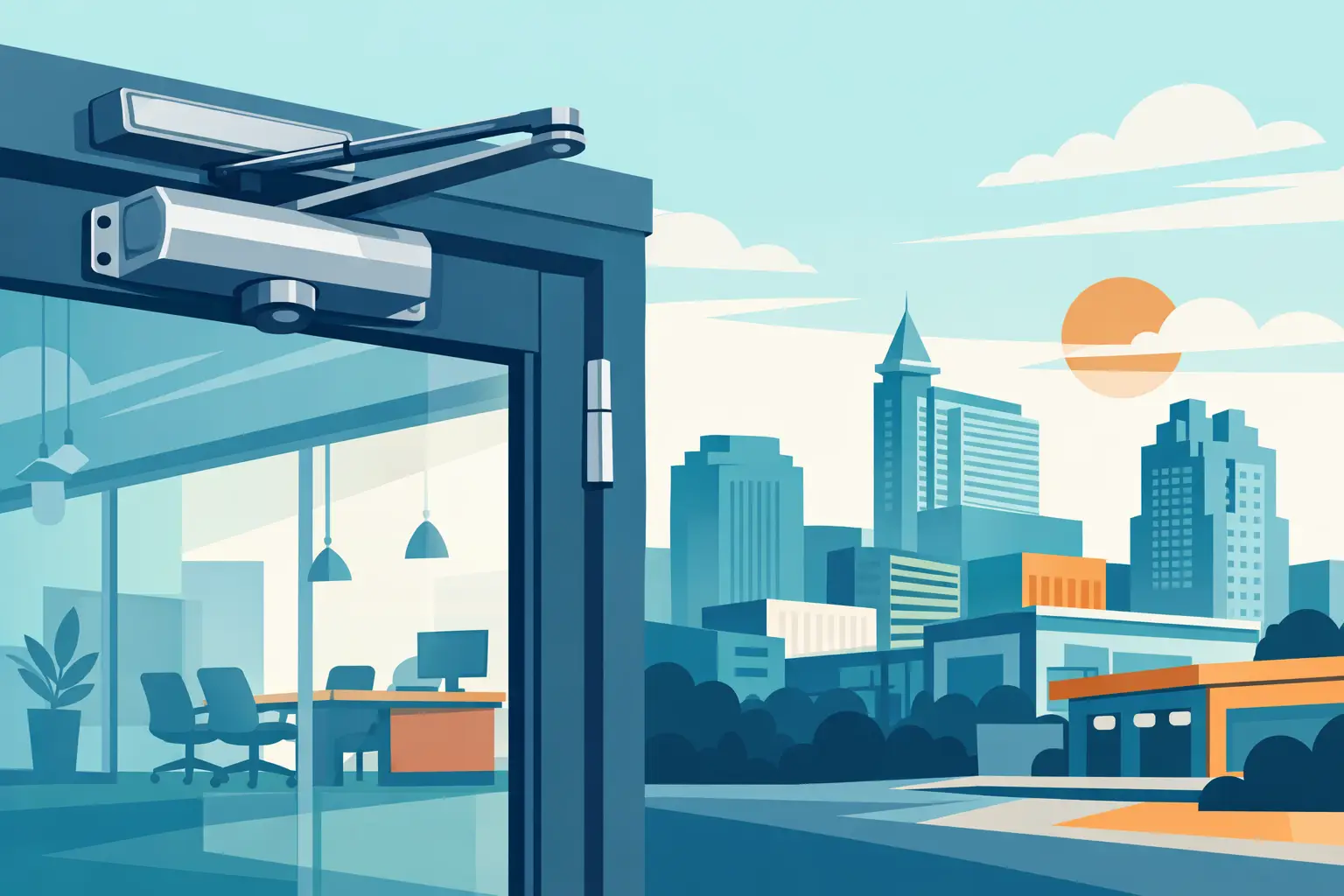
Retail stores, restaurants, medical offices, and public-facing businesses need a heavy-duty, surface-mounted closer. Surface-mounted closers are the familiar rectangular units installed at the top of the door or frame. They are widely used because they are durable, serviceable, and available with adjustable power settings.
For a busy entrance, choose a Grade 1 closer with adjustable sweep speed, latch speed, and backcheck. Sweep speed controls the door through most of its closing cycle. Latch speed controls the final few inches, where the latch must engage securely. Backcheck cushions the door when someone pushes it open forcefully, helping protect the wall, frame, and closer from repeated impact.
A parallel-arm setup is often a practical choice on the public side of an outswing door because the arm sits closer to the door surface and is less exposed to tampering. However, the correct mounting depends on the swing direction, frame conditions, and available clearance.
Office Suites and Interior Commercial Doors
Interior doors may not need the same level of force as a front entrance, but they still need controlled closing. Offices, storage rooms, employee-only areas, and suite entrances often do well with a quality adjustable surface closer or a concealed closer when appearance matters.
Concealed closers can provide a cleaner look because much of the hardware is hidden in the door or frame. The trade-off is that installation and future service can be more involved. They are best planned during construction, renovation, or door replacement rather than added as a quick fix.
For interior openings, avoid setting the closer stronger than necessary. An overly powerful closer can make a door difficult to open, especially for visitors, older adults, and employees carrying supplies. Proper adjustment matters as much as the unit itself.
Exterior Doors Exposed to Wind and Weather
Exterior doors in Raleigh face humid summers, heavy rain, seasonal temperature changes, and occasional wind pressure. Wind can pull or push against the door, making it slam, fail to close, or stop short of latching. This is common on side entrances, back doors, and buildings with open parking areas.
A closer with sufficient power adjustment and strong backcheck is usually the better choice for these locations. Depending on the opening, a higher-powered model may be necessary, but more force is not automatically better. Too much closing force can create an accessibility issue and place stress on the door hardware.
Before replacing the closer, inspect the door seals, hinges, threshold, and frame alignment. A worn sweep or sticking hinge can make a properly sized closer seem defective. Solving those issues first often improves performance and extends the life of the new hardware.
Fire-Rated Doors and Exit Doors
Fire doors must close and latch on their own. For these doors, the closer is a life-safety component, not a convenience item. The door closer and related hardware must be compatible with the rated opening and installed according to applicable fire and building requirements.
A hold-open arm is generally not appropriate on a fire-rated door unless it is tied to an approved release system that closes the door during an alarm. Wedging a fire door open or using an unapproved mechanical hold-open can defeat its purpose and create a code problem.
Exit doors may also require panic hardware, lever trim, alarms, or access-control components. Each added device changes the force and alignment needed for dependable latching. A professional inspection can confirm that the closer, panic bar, strike, and latch work together as intended.
Features Worth Paying For
Not every feature is essential, but a few adjustments deliver real value in commercial settings. Adjustable spring power allows the closer to be matched to the door size, weight, and site conditions. Separate sweep and latch-speed valves allow a technician to prevent slamming while still ensuring the latch catches.
Backcheck is especially useful for doors that are regularly pushed open quickly. Delayed action can also help in locations where people need extra time to pass through, such as clinics, supply rooms, or doors used with carts. It should be used carefully because it can affect security if the opening is left unmonitored for longer than intended.
Some businesses also benefit from a closer designed for low opening force. This can support accessibility goals, but the entire opening must be evaluated. Door weight, hinges, seals, lock hardware, and wind conditions all affect the amount of force required to open the door.
Common Mistakes When Replacing a Door Closer
The most common mistake is replacing a closer with the same style without identifying why the old one failed. If the door is dragging, the hinges are loose, or the latch is misaligned, a new closer may struggle in the same way.
Another mistake is treating adjustment screws like a fix for every problem. Turning valves too far can cause fluid leaks, poor closing control, or permanent closer damage. A closer that closes too slowly may leave the door unlocked. One that closes too quickly can slam and wear out the latch, frame, and hardware.
Businesses should also avoid mixing incompatible parts. A closer arm, bracket, or shoe may look similar to another model but may not be rated or designed to work with it. Commercial door hardware is built as a system, and shortcuts can create a recurring repair bill.
When to Call a Commercial Locksmith
Call for professional service when a door will not latch, slams unexpectedly, leaks oil, drags on the frame, has damaged hinges, or no longer meets the needs of the business. These signs may point to more than a worn closer.
A trained technician can evaluate the entire opening, recommend the appropriate closer type and mounting method, and adjust it for reliable operation. For businesses with restricted areas, they can also coordinate the closer with commercial locks, panic hardware, key systems, and access-control equipment.
Advance Locksmith Inc helps Raleigh businesses address door closer problems without guesswork, whether the need is a scheduled hardware upgrade or an urgent repair that affects security. The goal is a door that closes safely, latches consistently, and stays out of your employees’ way.
A commercial door should never demand attention just to do its job. Choose hardware based on the door’s real conditions, have it installed and adjusted correctly, and your entrance can provide the quiet, dependable protection your business needs every day.