

8 Garage Door Security Steps for Your Home

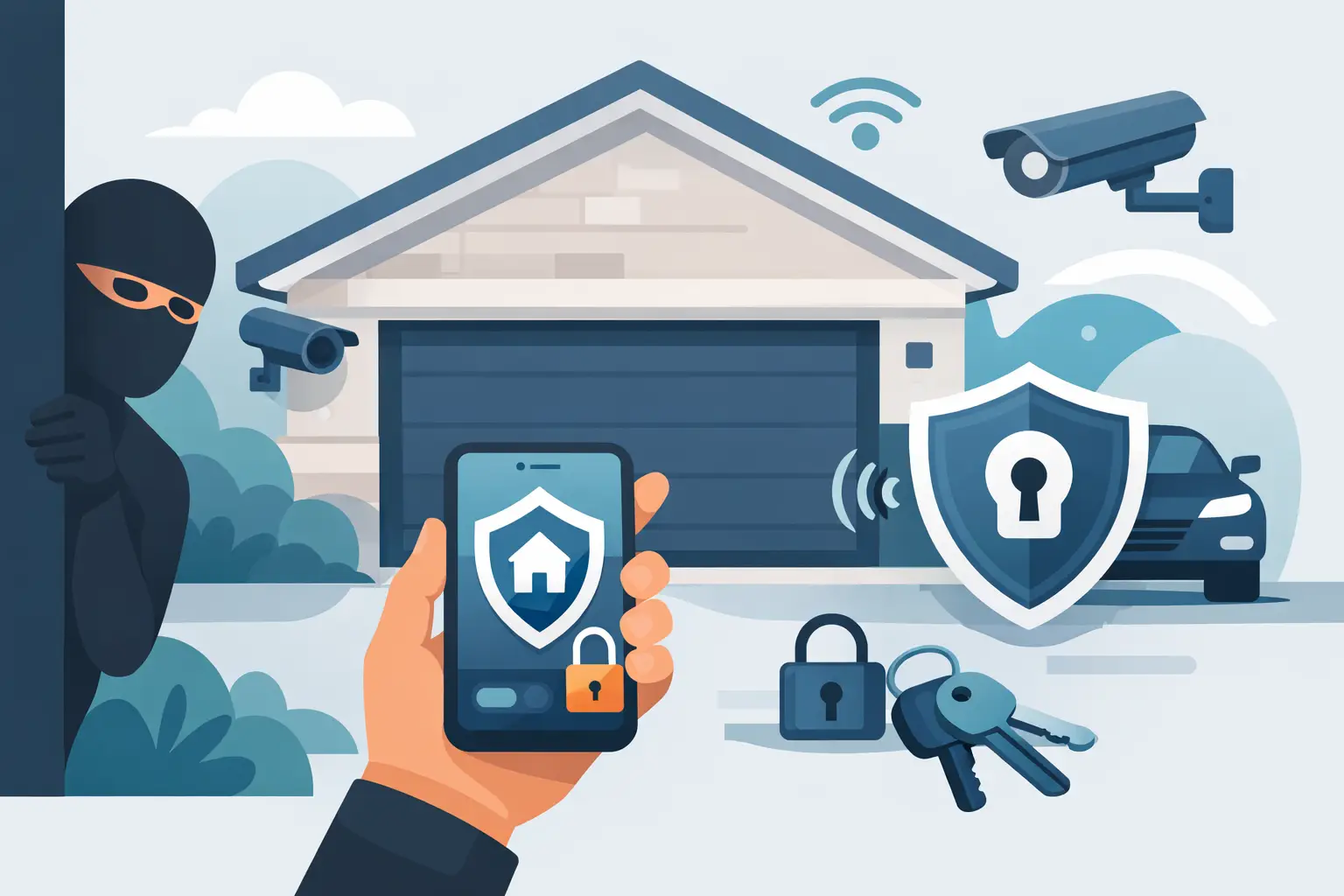
For many Raleigh homeowners, the garage is the door used most often and protected least carefully. Garage door security is not just about keeping a vehicle safe. A garage can contain tools, bicycles, lawn equipment, spare keys, and a direct path into your home. A few practical upgrades can close common weak points without making daily access difficult for your family.
Why the Garage Deserves More Attention
A closed garage door can create a false sense of security. The main door may be heavy and motorized, but the lock between the garage and the house is often a basic knob lock. Remote controls may be left in vehicles parked outside, and a side service door may have an old lock or a loose frame.
Burglars generally look for the easiest opportunity, not the most dramatic entry method. An unlocked interior door, an exposed emergency release, or a remote taken from an unlocked car can be enough. Good security uses layers. If one layer fails, another one should slow down or stop unauthorized entry.
This does not mean every home needs commercial-grade equipment. The right approach depends on the layout of your garage, whether it is attached or detached, what you store there, and how often people come and go. Start with the weaknesses that are easiest to fix.
1. Secure the Door Between the Garage and House
Treat the interior garage entry door like an exterior door. It should remain locked whenever no one is moving between the garage and the home. A deadbolt provides much better protection than a spring-latch knob alone, especially if the garage is attached.
Check the door itself, too. A hollow-core interior door is not a good choice for this location. A solid-core or metal door with a properly installed deadbolt, reinforced strike plate, and long mounting screws gives you a stronger barrier. Screws should extend into the wall framing, not only into the thin trim around the frame.
For households that prefer keyless entry, a quality keypad deadbolt can be a practical option. It allows you to give a temporary code to a contractor or houseguest and remove that code later. Just avoid sharing one permanent code with everyone who needs occasional access.
2. Stop Leaving Garage Remotes in Parked Cars
A garage remote in a vehicle is convenient until the vehicle is broken into. If a thief finds a remote along with paperwork that shows your address, they may know exactly where to use it.
Carry the remote with you, use a keychain remote, or use the garage door opener app if your system supports secure mobile access. If you need to leave a remote in a car, keep it out of sight and do not store registration documents with your home address in the same place.
When a remote is lost, stolen, or left in a vehicle that has been taken, erase it from the opener system as soon as possible. Then program only the remotes you still control. Replacing a remote without clearing old codes may leave the lost device active.
3. Use a Modern Opener With Rolling-Code Protection
Older garage door openers may use fixed access codes. That technology can be less secure because the same code is transmitted each time the remote is pressed. Newer openers typically use rolling-code technology, which changes the code after each use.
If your opener is old, unreliable, or does not offer rolling-code protection, replacement may be a smart security improvement. Modern systems can also provide activity alerts, app-based control, and the ability to confirm whether the door is open or closed when you are away.
Smart features should be set up carefully. Use a unique account password, enable multi-factor authentication when available, and review who has app access. Convenience is useful, but shared logins and weak passwords can create another way into your property.
4. Protect the Emergency Release Without Blocking Safety
The emergency release cord is necessary. It allows you to operate the garage door manually during an outage or opener malfunction. It should never be permanently tied down, removed, or disabled.
However, some garage layouts allow an intruder to reach the release through the top of the door with a simple tool. A properly installed emergency-release shield or garage door release protection device can make that type of access more difficult while preserving safe manual operation from inside the garage.
Because this part affects emergency access and door operation, installation should be done correctly. The door still needs to release quickly from inside during a fire, power outage, or mechanical failure. Security should never interfere with a safe exit.
5. Inspect the Garage Door, Tracks, and Manual Locks
A garage door that does not close fully is a security problem as well as a repair issue. Gaps, worn rollers, bent tracks, damaged panels, and an opener that reverses unpredictably can leave the door vulnerable or simply make it easier to force.
Test the door periodically by watching it close from a safe distance. It should move smoothly, meet the floor evenly, and remain shut. If you have a manual slide lock, make sure it is not accidentally engaged while the automatic opener is in use. Running an opener against a locked door can damage the motor or door hardware.
Do not try to adjust torsion springs or cables yourself. These components are under high tension and can cause serious injury. A garage door technician should handle mechanical repairs, while a locksmith can help evaluate the locks, entry doors, key control, and access options around the garage.
6. Do Not Overlook the Side and Service Doors
The side door is often the weakest point of garage door security. It may be hidden from the street, poorly lit, and equipped with a basic lock that has not been updated in years. If it leads into the garage, it deserves the same attention as a front or back entry door.
A strong deadbolt, reinforced strike plate, protected hinges, and solid door construction are the foundation. If the door has glass nearby, avoid keeping keys within reach. A thief who breaks a small pane should not be able to reach in and unlock the deadbolt.
Lighting also matters. Motion-activated lights can make it harder for someone to work unnoticed near a side door. Cameras can provide useful awareness, but they work best as part of a larger plan. A camera records an event; a quality lock and reinforced frame help prevent entry in the first place.
7. Control Keys and Access Codes
Think about everyone who can currently enter your garage. That might include family members, former tenants, dog walkers, cleaners, contractors, or neighbors who once had a spare key. If you are not certain who has a working key, rekeying the locks is usually more practical than wondering.
Rekeying changes the internal configuration of a compatible lock so old keys no longer work. It is often a cost-effective choice after moving into a home, ending a rental arrangement, losing keys, or completing a renovation. If the lock is worn or low quality, replacement may be the better long-term decision.
For keypad locks and smart openers, delete unused codes instead of leaving them active. Assign separate codes where possible. That makes it easier to remove access for one person without forcing the entire household to learn a new code.
8. Build Simple Daily Habits That Keep the Garage Safer
Security improvements work best when they become routine. Before bed and before leaving for a trip, confirm that the garage door and interior entry door are closed and locked. Do not leave the main garage door open while working in the yard, especially if no one is nearby.
Keep ladders and tools out of easy reach. A ladder stored in an open garage can help someone access upper windows, and tools can be used to damage locks or doors. Store valuable equipment farther from the door when possible, and avoid placing boxes labeled with expensive contents where they can be seen from outside.
If you travel often or manage a rental property, garage door alerts can be worthwhile. They cannot replace a physical lock, but they can tell you when the door has been opened unexpectedly and help you respond quickly.
When to Call a Security Professional
Some warning signs call for more than a quick adjustment: a damaged side-door frame, a lost set of keys, a remote stolen from a vehicle, repeated opener problems, or a garage that connects directly to living space with only a weak lock. These are situations where a professional assessment can identify the most effective fix before a minor weakness becomes a serious concern.
Advance Locksmith Inc can help Raleigh-area homeowners evaluate garage access points, rekey existing locks, install stronger deadbolts, and improve key control. The goal is straightforward: make your garage harder to enter without making your home harder to use.
A secure garage is built from ordinary decisions made consistently. Lock the door to the house, control who has access, keep equipment maintained, and address weaknesses while they are still easy to correct.