

Commercial Access Control Versus Keys for Business

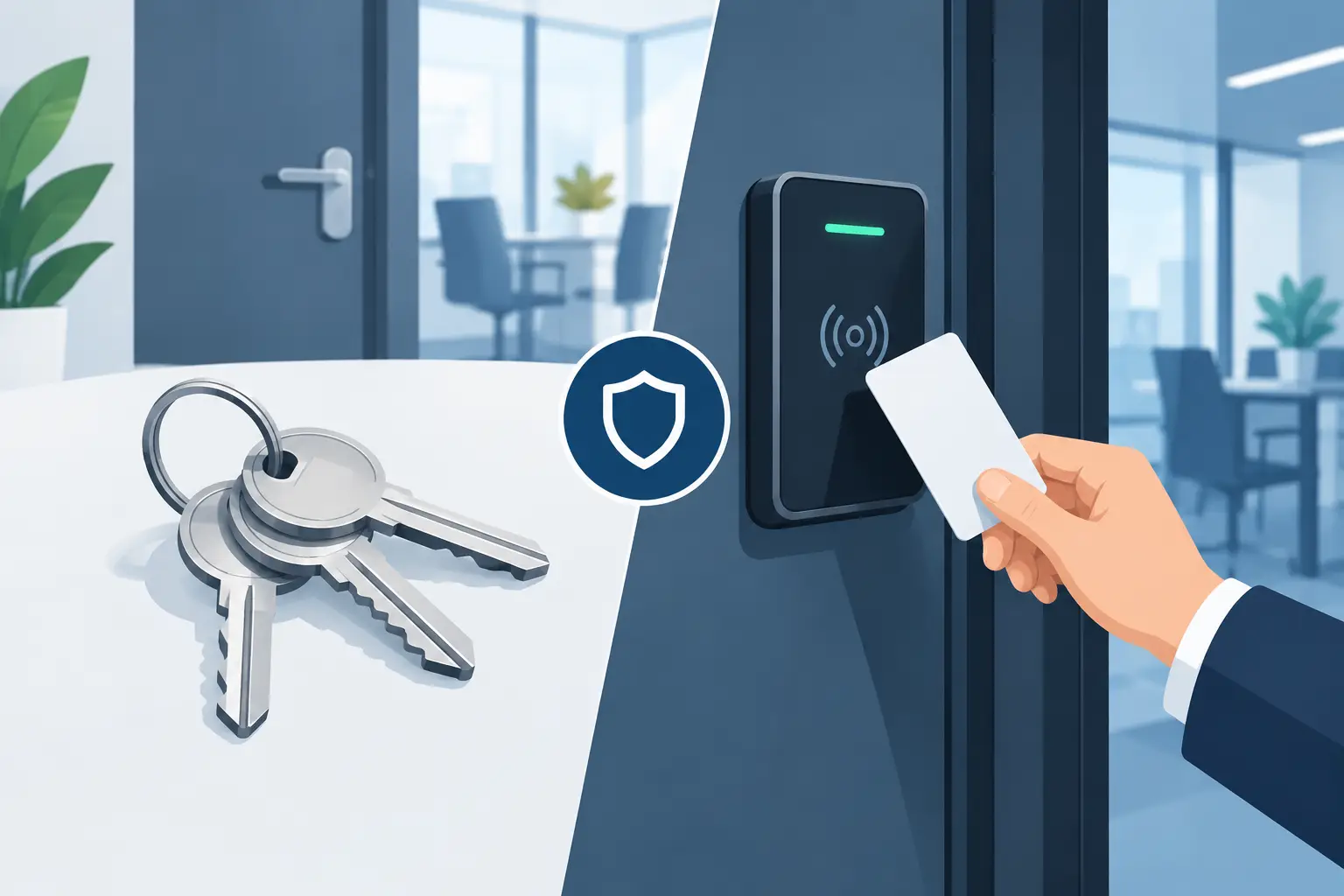
A former employee leaves, but nobody is certain whether they returned every key. A contractor needs access before opening hours. A manager is called at home because an employee is locked out. These are the everyday situations where commercial access control versus keys becomes more than a hardware decision. It affects how safely and efficiently your Raleigh business operates.
Traditional keys remain a practical choice for many small businesses. They are familiar, affordable, and dependable when managed well. Electronic access control adds more oversight and flexibility, but it also requires the right equipment, planning, and maintenance. The best answer depends on your building, staff size, security needs, and how often access changes.
Commercial Access Control Versus Keys: The Core Difference
A keyed lock gives access to anyone holding the correct physical key. That simplicity is its strength. There is no software to learn, no card reader to install, and no dependence on power at the door. For a small office with two owners and stable staffing, a quality commercial-grade lock and a controlled key system can be an effective solution.
Access control replaces or supplements physical keys with credentials such as key cards, fobs, mobile credentials, PIN codes, or biometric readers. An authorized person presents their credential, and the system records or allows access according to the permissions assigned to them. Instead of changing a lock when someone leaves, an administrator can usually remove that person’s credential from the system.
The difference is not simply old versus new. It is direct physical control versus managed, programmable control. A key works without a network, but it cannot tell you who used it or when. Access control can create that accountability, though the system must be properly installed and managed to deliver those benefits.
When Traditional Keys Make Sense
Keys are not automatically the less secure option. A well-installed commercial lock, paired with restricted keys and clear key policies, can protect the right property very well. They often make sense for businesses with limited staff, low turnover, and only one or two exterior doors.
For example, a small retail shop, professional office, or locally owned service business may only need a few authorized keyholders. If the same people open and close every day, a commercial deadbolt or lever lock can keep costs manageable while providing reliable security.
Keys also have an advantage during power outages or internet interruptions. Mechanical hardware continues to operate as long as the key and lock are in working condition. Many electronic systems include battery backup and fail-safe or fail-secure settings, but those details need to be selected carefully for each door.
The risk comes when key distribution expands without control. A copied key can be difficult to track. If an employee leaves on poor terms, a key is lost, or a vendor does not return a key, the business may need to rekey or replace the affected locks. That cost can add up quickly when several doors use the same keyway.
Improve Key Security Without Going Fully Electronic
Businesses do not have to choose between a basic hardware-store key and a complete access control system. Restricted key systems can limit unauthorized duplication. Master key systems can give owners and managers access to multiple areas while allowing employees to carry keys that only open the doors they need.
Rekeyable commercial locks are also valuable when staffing changes. Rather than replacing the entire lock, a locksmith can change the internal configuration so old keys no longer work. This is often a cost-effective response after turnover, lost keys, or a change in tenants.
Where Commercial Access Control Delivers More Value
Access control becomes especially useful when access changes frequently. Restaurants, medical offices, warehouses, property management offices, gyms, schools, and multi-tenant commercial buildings often have more people coming and going than a key system can comfortably manage.
With the right system, a manager can provide access to one employee for specific doors and specific hours. A delivery vendor might have access only to a rear entrance during a scheduled window. Cleaning staff can enter after business hours without receiving a master key. When their work ends, access can be removed without collecting and accounting for a physical key.
This capability is valuable for internal security as well. Not every employee needs access to inventory rooms, server closets, financial records, medication storage, or private offices. Access control lets a business separate public, employee-only, and high-security areas with more precision.
Better Records and Faster Responses
One major advantage of access control is the activity record. Depending on the system, business owners can see when a credential was used at a specific door. That information is useful after a security concern, an opening or closing issue, or a dispute about who entered a restricted area.
It is not a replacement for cameras, good hiring practices, or supervision. It is one part of a practical security plan. Still, having a door access record can save time and remove guesswork when an incident needs to be reviewed.
Access control can also reduce the disruption caused by a lost credential. A lost fob or card can be deactivated and replaced. With a metal key, you may need to decide whether the chance of misuse justifies rekeying the lock. For a business with several locations or frequent turnover, the ability to make quick changes can justify the higher initial investment.
Costs: Initial Price Versus Ongoing Cost
Traditional keys generally cost less to install. A commercial lock, keys, and professional installation are usually far less expensive upfront than readers, credentials, wiring, controllers, and system setup. For a single low-risk door, that difference matters.
However, upfront price is only one part of the decision. Consider the cost of rekeying after lost keys, replacing locks after a security concern, issuing keys to new employees, or sending a manager across town to let someone in. A business with regular staff turnover may spend more over time on key management than expected.
Access control has its own ongoing costs. Credentials can be lost, software or cloud-management plans may have fees, and electronic components eventually need service. Systems also require someone who will manage user permissions responsibly. If nobody is assigned to remove access when employees leave, the technology will not solve the underlying problem.
For many businesses, a mixed approach offers the best value. An electronic system can protect the main employee entrance, office suite, or restricted storage room, while quality mechanical locks secure lower-risk doors, gates, or utility areas.
Security Questions to Ask Before Choosing
Before selecting either option, start with how your business actually operates. A system should fit the daily routine instead of creating frustration for employees and customers.
Ask whether you need to know who entered a door, whether employees work different shifts, and how often staff or vendors change. Consider whether there are sensitive records, valuable inventory, cash-handling areas, or equipment that requires limited access. Also think about emergency egress requirements. Occupants must be able to leave safely, and fire code requirements must be considered when hardware is selected.
A busy medical practice may prioritize audit records and role-based access. A small accounting office may prefer restricted keys and a strong commercial lock. A warehouse may need keypad or fob access at multiple entrances, along with door closers and properly functioning panic hardware. There is no one-size-fits-all answer.
Do Not Overlook the Door Itself
The best lock or reader cannot compensate for a weak door, damaged frame, loose strike plate, or failing closer. Commercial security starts with the full opening: door condition, hinges, frame, latch alignment, exit hardware, and locking hardware.
For exterior doors, weather exposure and heavy traffic matter too. A door that does not close and latch consistently can create both security and access problems. Before installing electronic access control, have the door evaluated so the system can operate reliably.
Choosing the Right Option for Your Raleigh Business
If your business has a small, stable team and limited access points, upgraded commercial locks, restricted keys, and a rekeying plan may be the most sensible investment. You get dependable protection without paying for features you may never use.
If you manage multiple shifts, frequent turnover, vendors, sensitive areas, or several doors, access control can provide clearer oversight and faster control over who enters. It is often less about replacing every key and more about gaining control where it matters most.
A professional site assessment can identify the weak points in your current setup and help you avoid buying more system than you need. Advance Locksmith Inc can help Raleigh-area businesses evaluate commercial locks, rekeying options, high-security upgrades, and access control solutions based on the building and the way the business operates.
The right choice should make your employees’ day easier while making unauthorized access harder. Whether that means a restricted key system, electronic credentials, or a combination of both, a well-planned solution gives you confidence that your doors are working for your business, not creating another problem to manage.