
Best Ways to Secure Storefront Doors for Raleigh Businesses

A storefront door is often the first point an intruder tests and the first security detail customers notice. For Raleigh business owners, the best ways to secure storefront doors start with treating the door, frame, lock, and daily closing routine as one complete system. A strong lock on a weak aluminum frame can still leave your business exposed.
The right setup depends on your door type, operating hours, employee turnover, inventory, and budget. A retail shop with a glass entry door has different needs than a warehouse with a steel service entrance. What matters is identifying the weak points before they become an after-hours emergency.
Start With the Door and Frame
Many security upgrades focus on the lock, but the door and frame carry the force of any attempted break-in. Check for loose hinges, bent strike plates, worn closers, gaps around the door, and frames that shift when the door is pushed. These are common signs that a door may not withstand pressure even if its lock is in good condition.
For metal or aluminum storefront doors, reinforced strike areas and properly fitted hardware are especially important. The lock bolt needs to enter solid material in the frame, not a thin or damaged section that can split or flex. A professional locksmith can inspect whether the existing frame can support a higher-security lock or needs reinforcement first.
Glass entry doors require a balanced approach. Heavy-duty hardware helps, but security film, appropriate glazing, and visible alarm coverage may be just as valuable as changing the lock. The goal is to slow forced entry, create noise or alerts, and make the location less attractive to someone looking for a quick opportunity.
Choose Commercial-Grade Locking Hardware
Residential-grade deadbolts and basic knob locks are rarely the right choice for a business entrance. Commercial doors see more use, more keyholders, and more opportunities for wear or misuse. Install hardware designed for frequent traffic and the specific construction of your storefront door.
A commercial-grade deadbolt can provide dependable protection on many solid doors, while narrow-stile storefront doors may need mortise locks, hook bolts, or deadlatch hardware made for aluminum frames. Double-door entries often require careful coordination between the active and inactive doors so there is no exposed gap or weak latch point.
High-security cylinders are worth considering when key control is a concern. These cylinders are designed to resist common forms of forced manipulation and can use restricted keyways. Restricted keys cannot be copied casually at a hardware store, helping owners maintain better control over who has access.
The trade-off is cost. High-security hardware is more expensive upfront than a standard replacement lock. For businesses with valuable inventory, sensitive records, or frequent employee changes, that added protection can prevent a much larger loss later.
Reinforce the Strike Plate and Hinges
The strike plate is where the lock engages with the frame. If it is loose, shallow, or attached only to thin trim, a strong deadbolt cannot perform as intended. Reinforced strike plates and longer, properly placed screws help distribute force into the building structure.
Hinges deserve the same attention. Doors that swing outward can expose hinge pins on the exterior side. Security hinges, non-removable hinge pins, or hinge bolts prevent the door from being defeated by removing those pins. If your entrance has continuous hinges, inspect them for loose fasteners and alignment problems.
These upgrades are not always visible to customers, but they are among the most practical ways to improve physical security. They also help keep the door aligned, which reduces lock wear and prevents frustrating end-of-day problems where a key turns but the bolt will not fully extend.
Use Access Control Where It Makes Sense
Keys are simple, but they are difficult to track once they leave your hands. If your business has multiple employees, contractors, cleaners, or delivery personnel, electronic access control can provide more accountability than a traditional key ring.
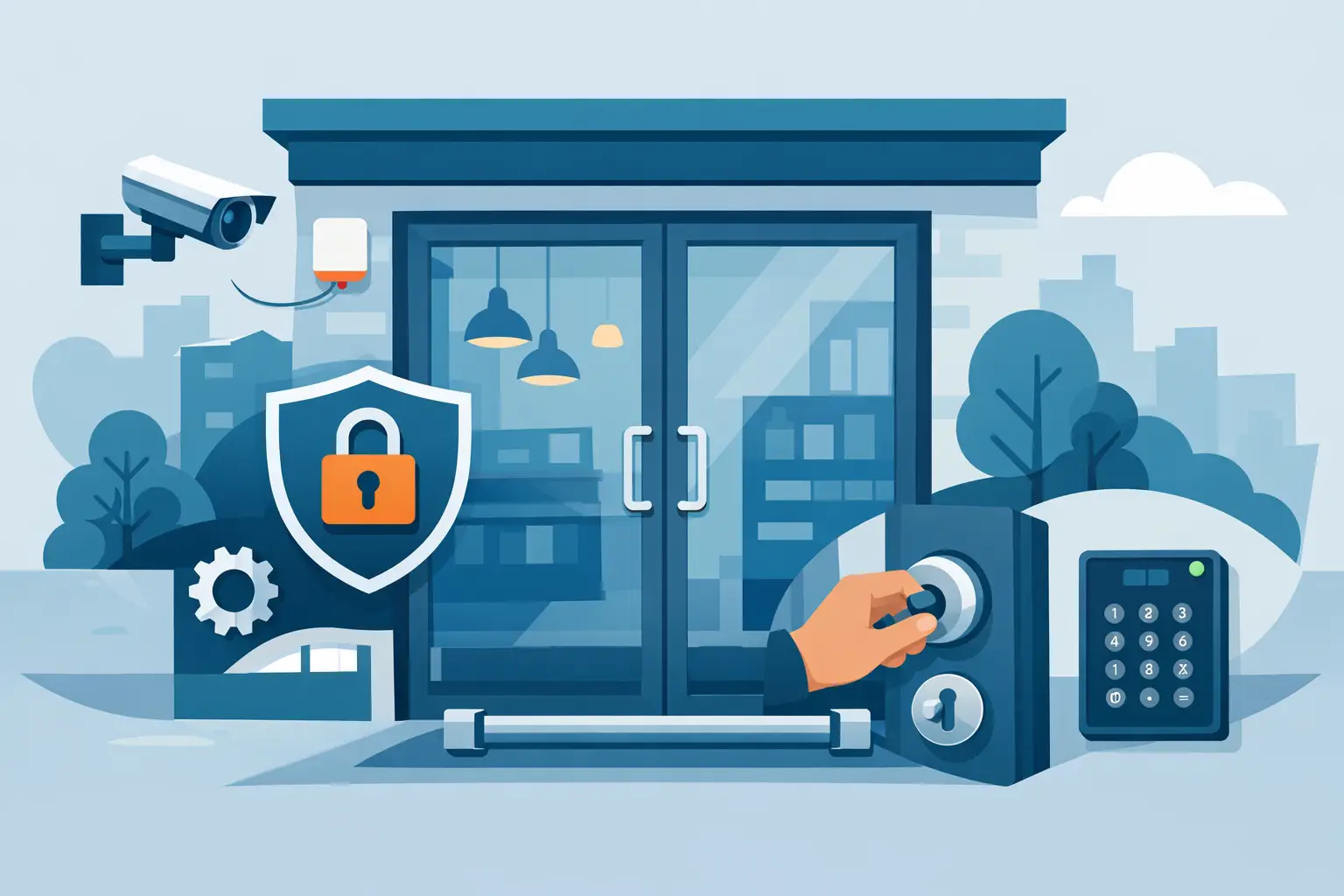
Keypad locks, card readers, fobs, and mobile credentials let you add or remove access without replacing the entire lock. Some systems also record entry activity, which can be useful for managing opening and closing responsibilities. For offices, salons, medical spaces, and small retail operations, this can be a practical step up from constantly rekeying after staff changes.
Access control should not mean relying only on electronics. Every system needs reliable mechanical hardware, proper installation, and a plan for power failures or emergencies. Choose a setup that allows safe exit at all times and complies with local fire and building requirements. A locksmith can help match the access system to the door, traffic level, and code requirements rather than installing a one-size-fits-all product.
Rekey Promptly After Staff Changes
One of the best ways to secure storefront doors is also one of the easiest to overlook: rekey the locks when access changes. Lost keys, former employees, vendor turnover, and changes in management can all leave unknown copies in circulation.
Rekeying changes the internal configuration of the lock so old keys no longer work. It is often more affordable than replacing the full lock, provided the existing hardware is in good condition. If the lock is worn, damaged, or too basic for the level of risk, replacement may be the better investment.
Set a clear key policy. Limit physical keys to people who truly need them, keep a record of who receives each key, and avoid labeling keys with the business name or address. For locations with several exterior doors, consider whether all doors should share a key or whether separating access would reduce risk.
Do Not Forget Secondary Entrances
Front doors receive attention because they are visible. Rear exits, delivery doors, storage-room entrances, and side doors are often more vulnerable because they are less visible from the street. A strong front entrance does little good if the back door has a loose latch or an old lock with unknown key copies.
Walk the property after dark and look at it from the perspective of someone trying to avoid being seen. Is the rear entry well lit? Does landscaping block views of the door? Is there a camera covering the approach and the door itself? Does the door close and latch every time without being pulled or lifted?
Good exterior lighting and visible cameras can support door security, but they do not replace quality locks and reinforced hardware. Cameras may help identify what happened after an incident. A properly secured door helps stop the incident from happening in the first place.
Build a Closing Routine Employees Can Follow
Security equipment works best when the people using it have a consistent routine. Before leaving, employees should confirm that every exterior door is fully closed and locked, not just pulled shut. Doors with closers can appear closed while the latch has not caught completely.
A simple closing checklist can include checking the front and rear doors, activating the alarm if one is installed, securing cash and high-value items, and reporting any door that sticks or fails to lock smoothly. Small issues should be addressed quickly. A door that needs to be slammed, lifted, or pulled hard to lock is signaling a problem.
Avoid leaving spare keys under mats, in planters, above door frames, or in predictable hiding places. If employees need after-hours access, use a controlled key process or an appropriate electronic access solution instead.
Schedule Repairs Before a Lock Fails
Business owners often call for service only after a lockout, break-in, or broken key. Preventive service is usually less disruptive. Regularly inspect locks, closers, panic hardware, door alignment, and frames, especially after severe weather, construction nearby, or a forced-entry attempt.
If you notice a loose handle, a deadbolt that drags, a key that catches, or a frame that is separating from the wall, schedule service before the door becomes unusable. Advance Locksmith Inc provides commercial lock repair, rekeying, high-security upgrades, and emergency locksmith service for businesses in Raleigh and nearby communities.
A storefront door should give you confidence when you lock up at night, not leave you wondering whether it will hold. Address the small warning signs now, and keep a trusted local locksmith’s number available for the moments when security cannot wait.