
Smart Locks vs Deadbolts: Which Fits Your Home?

A front-door lock has one job: keep the wrong people out while letting the right people in without a daily hassle. That makes the choice between smart locks vs deadbolts more practical than trendy. For many Raleigh-area homes and businesses, the best answer is not choosing one over the other. It is choosing a quality deadbolt, then deciding whether smart features make access easier for the people who need it.
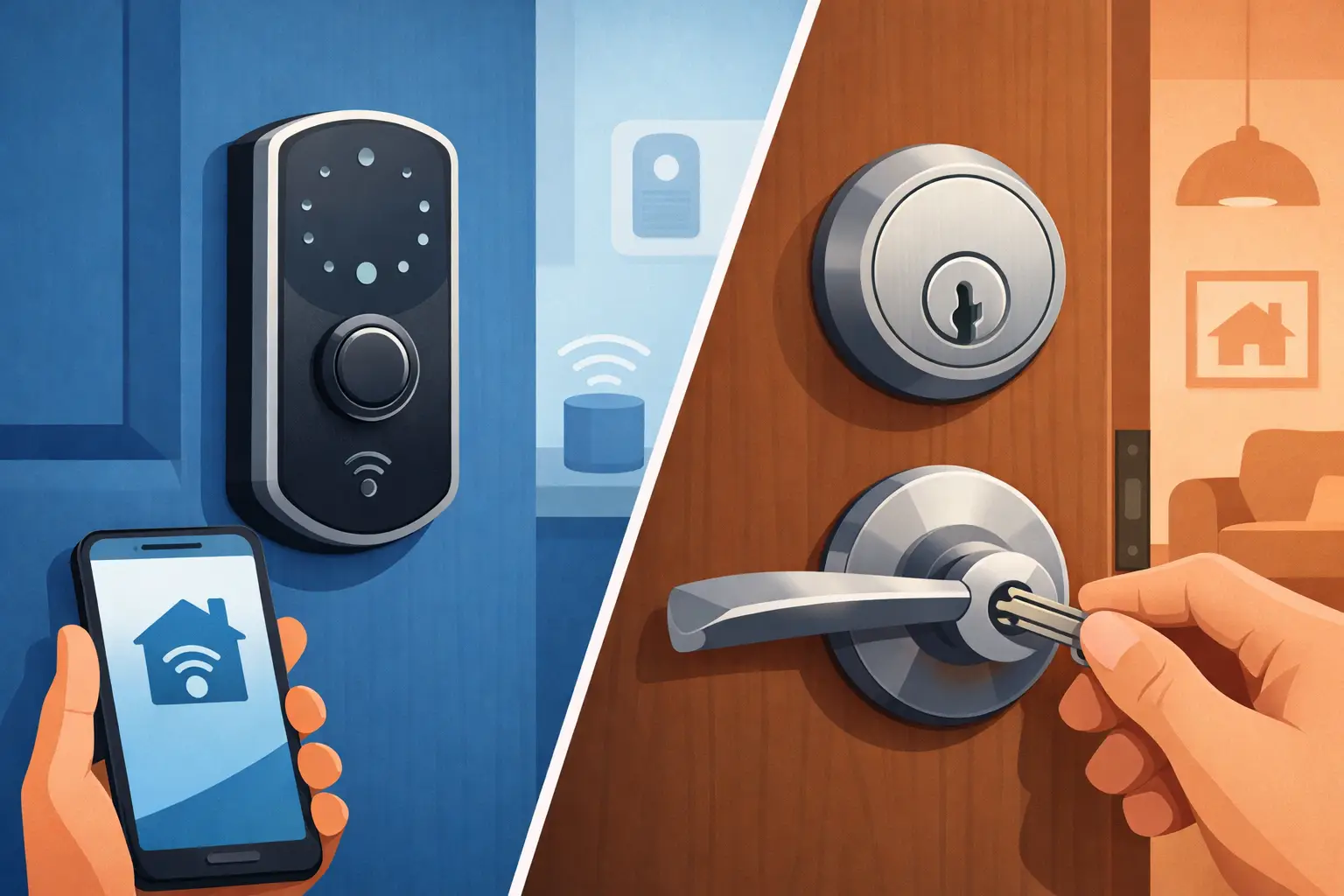
A traditional deadbolt is simple, familiar, and dependable. A smart lock can add keypad codes, phone control, activity alerts, and easier guest access. Neither option is automatically more secure just because it is newer or more expensive. The quality of the lock, the condition of the door and frame, and proper installation all matter.
Smart Locks vs Deadbolts: The Key Difference
A standard deadbolt is operated with a physical key from the outside and a thumbturn from the inside. It uses a solid bolt that extends into the door frame, making it much harder to force the door open than a basic spring-latch lock.
A smart lock adds electronic access options. Depending on the model, you may use a keypad code, mobile app, fingerprint reader, key fob, or remote command. Many smart locks are still deadbolts mechanically. They simply replace or modify the exterior key cylinder and interior thumbturn with electronic controls.
This distinction matters when comparing smart locks vs deadbolts. The real choice is often between a conventional keyed deadbolt and a smart deadbolt, not between electronic convenience and physical door security. A quality smart deadbolt still needs a strong bolt, a properly reinforced strike plate, and secure installation to protect the entry.
When a Traditional Deadbolt Makes Sense
A standard deadbolt remains a strong choice for homeowners who want straightforward protection with no batteries, apps, or programming. Insert the key, turn it, and the lock operates. There is very little to manage, which can be especially reassuring for older family members, rental owners with simple access needs, or anyone who prefers a physical key.
Traditional deadbolts also work well when you want dependable security at a lower upfront cost. If a tenant moves out, a key is lost, or you are concerned that someone may still have a copy, rekeying the lock is usually faster and less expensive than replacing the full hardware. A professional locksmith can change the internal key configuration so the old keys no longer work.
The main drawback is key control. Keys can be copied, misplaced, or passed along without your knowledge. If you routinely give access to dog walkers, cleaners, relatives, maintenance workers, or short-term guests, managing physical keys can become frustrating. You may not know who has a working copy until it is time to rekey.
Where Smart Locks Offer Real Advantages
Smart locks are most useful when several people need access at different times. Instead of handing out keys, you can assign individual codes. Many models let you create temporary codes for a contractor, houseguest, or service provider, then remove those codes when the job is finished.
For busy households, that can eliminate the common problem of a child arriving home without a key. For a small business, a keypad lock can reduce the need to collect and replace employee keys. Some systems also keep an access history, which can help owners confirm when a door was opened.
Remote features can be helpful, but they should not be the only reason to choose a lock. If you are traveling and need to let a trusted person into your home, remote access can save time. If your phone battery is dead or the lock loses power, however, you need a reliable backup plan. Most quality smart locks provide an exterior keyway, emergency power contacts, or another approved backup method.
Convenience is valuable, but it does not replace sound security habits. Use unique app passwords, enable multi-factor authentication when offered, and remove old user codes promptly. A code that belonged to a former tenant, employee, or contractor should not stay active just because it is easy to forget.
Security Depends on More Than the Lock
Whether you choose a smart model or a conventional deadbolt, the door assembly deserves attention. A heavy-duty lock cannot fully compensate for a weak door jamb, short strike-plate screws, damaged frame, or loose hinges. Forced-entry resistance comes from the complete installation.
Look for a deadbolt with a recognized residential security grade and solid construction. The strike plate should be secured into the wall framing with long screws, not only into thin trim. Exterior doors should close and latch cleanly without requiring you to lift, push, or pull the door to turn the bolt.
Smart locks add a few electronic considerations. Choose a reputable manufacturer that provides ongoing firmware updates and clear security controls. Avoid sharing a single code among everyone in the household. If the lock connects to Wi-Fi or a smart-home hub, protect the home network with a strong, unique password.
Physical key override is another important consideration. A keyed smart deadbolt provides a familiar backup option, but it also means the key cylinder should be protected like any other lock. If a key goes missing, have the lock rekeyed or replace the cylinder promptly.
Battery Life, Weather, and Everyday Reliability
Most smart locks run on standard batteries and give advance low-battery warnings through the keypad, app, or both. In normal use, batteries commonly last months rather than days, but the actual lifespan depends on the model, weather, connectivity, and how often the lock operates.
Do not wait for the final warning. Keep fresh batteries available and replace them on schedule. A dead smart-lock battery should not leave you stranded if the hardware was selected and installed correctly, but planning ahead prevents an inconvenient late-night problem.
Raleigh’s heat, humidity, heavy rain, and seasonal temperature changes can affect exterior hardware over time. Select a lock rated for exterior use and make sure the door is properly aligned. Moisture, swelling, and frame movement can cause a bolt to bind, whether the lock is smart or traditional. If you have to force the thumbturn or hear the motor straining, address the alignment issue before it becomes a lockout.
Smart Locks for Rentals and Small Businesses
For rental properties, smart locks can simplify turnover. A property owner can remove a former tenant’s code and create access for the next tenant without waiting to recover every key. Still, not every lease situation calls for electronic access. Some tenants prefer conventional keys, and landlords should be clear about who can manage codes, app access, and notifications.
For a small business, a keypad deadbolt may be appropriate for a low-traffic office, storage room, or employee entrance. Businesses with multiple doors, changing schedules, sensitive records, or higher employee turnover may need a more complete access-control system. A residential-grade smart lock is not always the right solution for a commercial door.
Before installing any smart lock in a rental, condo, or commercial property, check property rules, fire-code requirements, and door hardware compatibility. Certain doors require specific exit hardware, and any access-control setup must allow occupants to leave safely without special knowledge or a key.
Installation Can Make or Break Either Choice
Many lock problems are installation problems. A deadbolt may look centered but fail to extend fully into the strike plate. A smart lock may be mounted on a door that is too thick, poorly aligned, or incompatible with the existing bore holes. These issues can shorten hardware life and create frustrating access failures.
Professional installation is especially useful when upgrading older doors, replacing damaged hardware, correcting frame alignment, or improving strike-plate reinforcement. It also gives you the chance to rekey compatible locks so one key can operate multiple exterior doors, even if you add smart access at the main entry.
Advance Locksmith Inc helps homeowners, landlords, and local businesses assess the door, lock type, and daily access needs before recommending an upgrade. The goal is not to sell unnecessary technology. It is to install dependable hardware that fits the property and works when you need it.
Which Option Should You Choose?
Choose a traditional deadbolt if you want simple, affordable, key-based security with minimal maintenance. It is an excellent option for many exterior doors, especially when paired with proper rekeying and reinforced installation.
Choose a smart deadbolt if you regularly manage guest, family, employee, or service-provider access and want more control over codes. It can make daily entry easier while preserving the protection of a quality mechanical deadbolt.
If you are unsure, start with the door and your access routine. A secure, properly installed deadbolt is never the wrong foundation. From there, smart features should solve a real problem, not add another device to manage. A local locksmith can help you select hardware that protects your property without making access more complicated than it needs to be.