

Keyless Entry for Small Business: Is It Worth It?

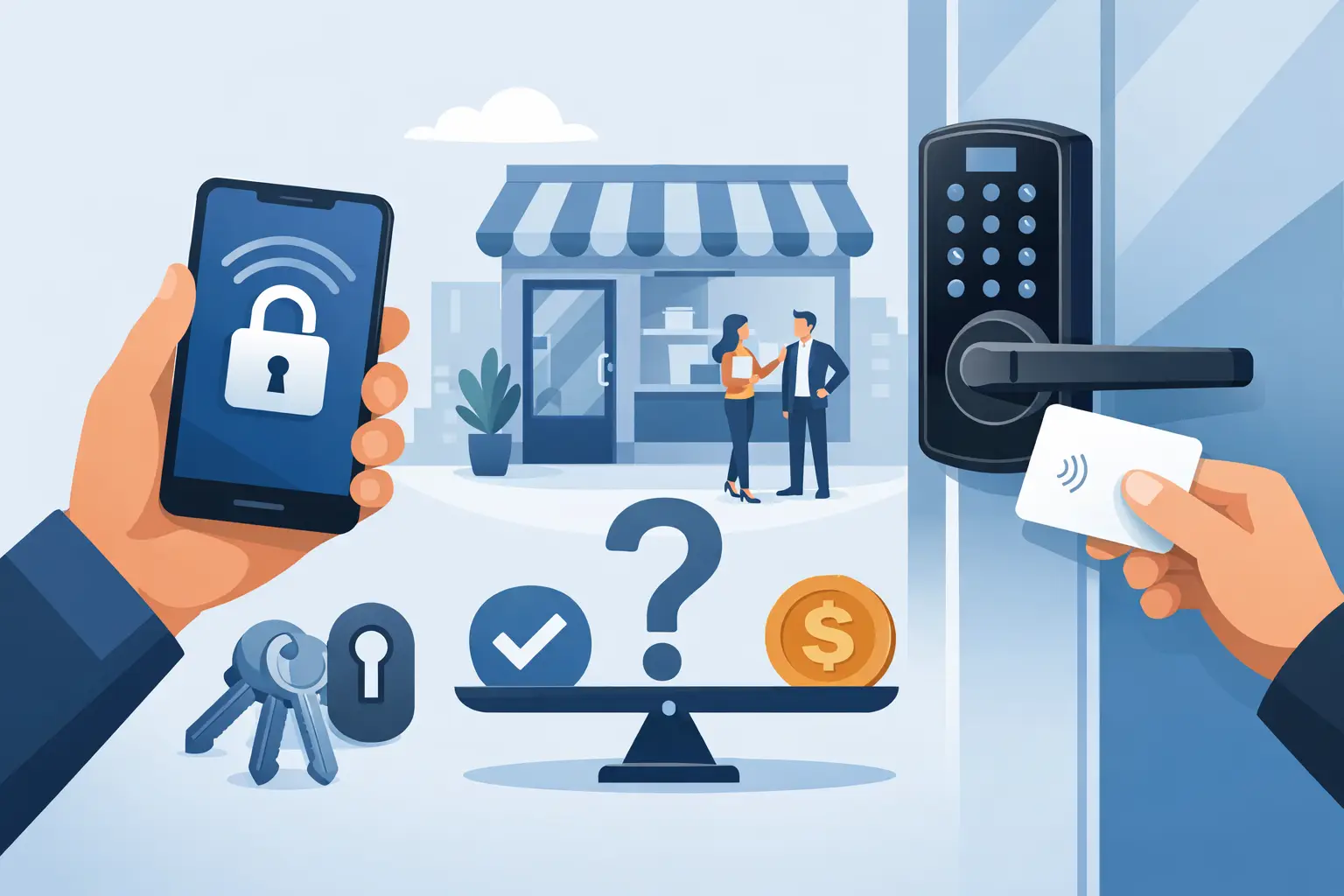
A missing employee key usually creates the same bad choice for a business owner – ignore the risk or pay to rekey the doors. That is one reason keyless entry for small business keeps gaining attention. It gives owners more control over who comes and goes, and it cuts down on the problems that come with copied keys, staff turnover, and after-hours access.
For many small businesses, the appeal is simple. You want the front door, office, stockroom, or side entrance to stay secure without handing out physical keys that can be lost, shared, or never returned. A properly installed keyless system can make day-to-day access easier while giving you better visibility and control. But it is not the right fit in every case, and the best setup depends on your building, staff size, budget, and security priorities.
What keyless entry for small business actually means
Keyless entry is a broad term. In a small business setting, it usually means a door can be opened without a traditional metal key. That might happen through a keypad code, a key fob, a card reader, a mobile app, or a more advanced access credential tied to an access control system.
Some systems are fairly basic. A standalone keypad lock on an employee entrance may be enough for a small office with a handful of trusted staff members. Other systems are more advanced and let the owner or manager assign unique credentials, create schedules, track entries, and remove access instantly when an employee leaves.
That range matters because many business owners hear “keyless entry” and assume they need a large, expensive commercial access system. Often, they do not. In some cases, a single upgraded lock solves the biggest problem. In others, especially if there are multiple employees, multiple doors, or sensitive inventory, a more structured system makes better sense.
Why small businesses are moving away from traditional keys
Physical keys are familiar, but they create headaches that add up over time. If an employee loses a key, you cannot always know where it ended up or whether someone copied it. If a former employee never returns a key, your choices are limited. If several people share one key, there is no accountability at all.
Keyless entry changes that. Instead of replacing hardware every time access needs to change, you can often change a code, deactivate a fob, or update permissions. That can save money over the long run, especially for businesses with regular staffing changes.
There is also the convenience factor. Owners do not have to meet an employee after hours just to hand over a key. Cleaning crews, managers, and delivery staff can be given scheduled access instead of unrestricted entry. For businesses that open early, close late, or rely on multiple vendors, that can remove a lot of friction.
Where keyless entry helps most
Keyless entry for small business is especially useful in places where staff turnover, shared access, or sensitive areas are part of daily operations. Retail stores often use it for back doors, offices, and stockrooms. Restaurants may use it for manager-only areas or employee entrances. Small medical, legal, and professional offices often want tighter control over records rooms, internal offices, and main entry points.
It also makes sense for businesses that need better control without hiring full-time security staff. If you operate a salon, warehouse unit, studio, clinic, or small office in Raleigh or nearby areas, the ability to manage access without chasing keys can be a real advantage.
That said, not every door needs the same level of protection. A front public entrance may need different hardware than a private office or rear service entrance. Good planning matters more than simply adding electronic locks everywhere.
The main benefits and the real trade-offs
The strongest benefit is control. You can decide who gets access, when they get it, and in many systems, where they can go. That is a big improvement over one key opening everything.
Another benefit is speed when something changes. If an employee quits unexpectedly, there is no need to wait and hope the key comes back. Access can often be removed right away. That helps limit risk and gives owners peace of mind.
There can also be cost savings over time. Rekeying after staff turnover, replacing lost keys, and managing duplicate copies all cost money. A keyless setup may reduce those recurring issues.
But there are trade-offs. Electronic hardware costs more upfront than a standard lock. Some systems need batteries, software setup, or periodic maintenance. A cheap consumer-grade lock may not hold up well on a busy commercial door. And if the system is chosen poorly, convenience can come at the expense of reliability.
This is where professional guidance matters. The right system should match the traffic level, door type, security needs, and budget. A boutique with three employees needs something different than a multi-tenant office suite or a restaurant with rotating staff.
Choosing the right type of system
The most practical starting point is to think about how your business actually operates. How many people need access? Do they all need access to the same doors? Do you want audit trails, scheduled entry, or remote management? Or do you mainly want to stop dealing with loose keys?
A standalone keypad lock works well for some small businesses because it is straightforward and cost-conscious. It is often a good fit when access needs are simple and the owner wants a cleaner alternative to physical keys.
If you need more accountability, individual credentials such as fobs or coded users are a better option. These make it easier to know who entered and to remove only one person’s access instead of changing the system for everyone.
For businesses with multiple doors, frequent employee changes, or higher-value assets, a broader access control system may be worth the investment. These setups can offer scheduling, reporting, and centralized control. They cost more, but they also solve more problems.
Installation matters as much as the hardware
A strong lock on the wrong door, or a well-rated device installed poorly, can still leave a business exposed. Commercial doors vary widely. Frame condition, door material, fire rating, strike alignment, closers, and traffic volume all affect what hardware will work well.
That is why business owners should think beyond features on a product box. A locksmith who understands commercial security can evaluate whether the existing door supports the system you want, whether reinforcement is needed, and whether the lock will hold up under daily use.
This is also the point where life safety and code considerations can come into play. You want secure access, but you also need safe and legal egress. The right installation balances both.
When keyless entry may not be the full answer
Sometimes owners expect keyless entry to solve every security concern, but doors are only one part of the picture. If the frame is weak, the closing hardware is failing, or the back entrance never latches properly, changing the lock alone may not fix the real problem.
There are also businesses where a hybrid approach works best. You might use keyless entry on employee and restricted doors while keeping traditional hardware in lower-risk areas. Or you may pair keyless access with door closers, high-security cylinders, or rekeying on select openings.
The best result is usually not the most expensive system. It is the one that fits your workflow and reduces your actual risks.
What small business owners should ask before upgrading
Before installing any system, ask a few practical questions. Who needs access today, and who may need it six months from now? Do you need one door secured or several? Is after-hours vendor access common? Would it help to remove access without changing locks? Do you want records of entry, or is simple controlled access enough?
You should also think about reliability. What happens if batteries are low, power is interrupted, or an employee forgets a code? A good setup accounts for normal real-world problems, not just ideal use.
If you are unsure where to start, a local commercial locksmith can walk the property, identify weak points, and recommend a setup that makes sense for your size and budget. For businesses in Raleigh and nearby communities, that kind of on-site advice often prevents overspending on features you do not need or underbuying hardware that will not last.
Advance Locksmith Inc works with business owners who need practical security improvements, not sales pressure. That matters when you are trying to protect your property while keeping operations simple for staff.
Is keyless entry for small business worth it?
For many owners, yes – especially if lost keys, employee turnover, shared access, or restricted areas are ongoing issues. The value is not just convenience. It is better control, faster response when access changes, and fewer weak spots caused by unmanaged keys.
Still, it depends on the door, the property, and how your business runs. A small, well-planned upgrade can make a big difference. And when the system is chosen carefully and installed correctly, keyless entry can feel less like a tech upgrade and more like one less problem on your plate.
If your current setup leaves you guessing who has keys, whether old copies are still out there, or how secure the back door really is, that is usually the right time to look at better options.